






India Plans Common Design Standards for Future Bullet Train Network
India’s high speed rail ambitions are entering a new phase. While the Mumbai Ahmedabad Bullet Train project is laying the foundation for high speed travel in the country, the government is now...

India’s high speed rail ambitions are entering a new phase. While the Mumbai Ahmedabad Bullet Train project is laying the foundation for high speed travel in the country, the government is now preparing for a wider national network by developing common engineering standards for future bullet train corridors. The move is expected to simplify construction, reduce costs and help India build long term expertise in high speed rail infrastructure.
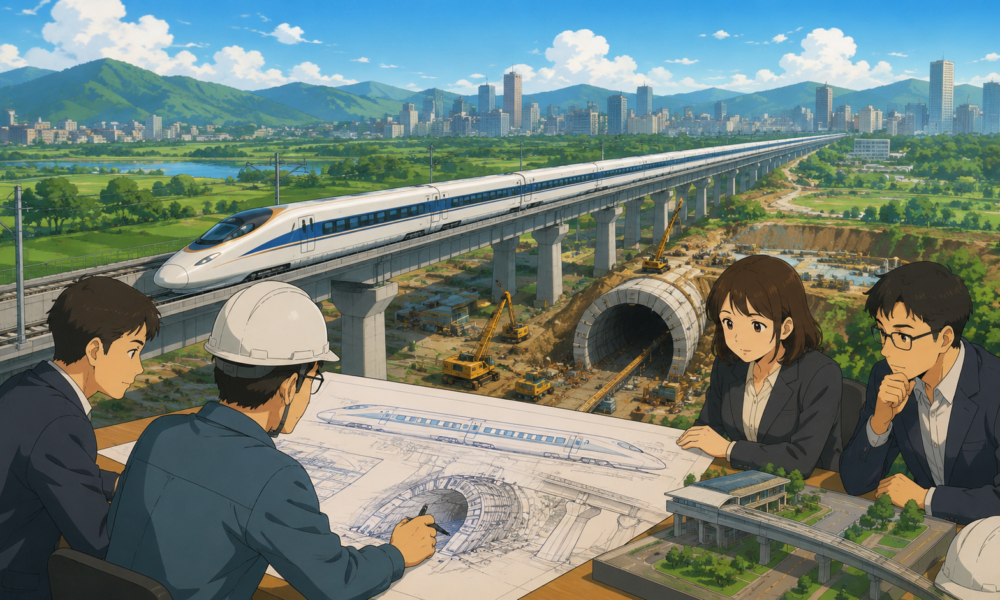
The National High Speed Rail Corporation Ltd has invited consultancy bids to prepare standard civil engineering designs for seven proposed bullet train corridors. Instead of developing separate structural designs for every project, the new framework will establish common specifications for bridges, elevated sections, tunnels, stations and other key infrastructure capable of supporting trains operating at speeds of up to 350 kmph. Officials believe the approach will make future projects faster to plan and easier to execute.
The consultancy will initially focus on the Chennai Bengaluru and Delhi Varanasi corridors. It will also prepare designs for major tunnel sections on the Chennai Bengaluru route, including underground stretches near Chennai and Bengaluru and a tunnel passing through the Mogili Ghat section of the Kaundinya Wildlife Sanctuary. Together, these tunnels will extend for nearly 35 kilometres, making them among the most technically demanding parts of the proposed network.
Developing standard designs is expected to deliver benefits beyond construction. Reusable engineering specifications can reduce design costs, shorten approval timelines and improve consistency across projects. They will also enable Indian engineering companies, contractors and manufacturers to build specialised capabilities that can be applied to multiple high speed rail projects, strengthening domestic supply chains and supporting the country’s broader infrastructure development goals.
The initiative also reflects the government’s long term vision for modern transport. High speed rail is expected to improve connectivity between major economic centres, reduce travel times and encourage regional growth by making business travel faster and more efficient. The Union Budget 2026 to 27 announced seven new high speed rail corridors as part of this wider strategy, with the proposed network covering around 4,000 kilometres and representing an estimated investment of about Rs 16 lakh crore.
Officials have said that experience gained from the Mumbai Ahmedabad High Speed Rail project will play an important role in planning future corridors. The country’s first bullet train project has helped build expertise in land acquisition, project management, environmental clearances and advanced railway engineering. Those lessons are expected to reduce implementation challenges as the network expands.
India’s first bullet train project continues to be developed in partnership with Japan, whose Shinkansen technology has introduced internationally recognised standards for safety, operations and engineering. The collaboration has also helped Indian engineers and institutions gain practical experience in designing and building high speed rail systems. As India develops its own standard infrastructure designs, that international cooperation is expected to remain an important source of technical knowledge while supporting the country’s growing emphasis on self reliance.
Construction of the Mumbai Ahmedabad corridor is progressing, while planning work for the next generation of high speed rail routes has already begun. By introducing standard engineering designs at an early stage, the government aims to reduce duplication, improve efficiency and create a strong foundation for future expansion. If implemented successfully, the initiative could accelerate the rollout of India’s planned bullet train network and support the country’s long term goal of building a modern, reliable and globally competitive transport system.





No Comment! Be the first one.