








Why India’s AI Revolution Will Be Powered by Telecom Infrastructure
The world is witnessing a rapid boom in AI technologies. However, strong infrastructure is the basic prerequisite for AI to function. Telecom networks, fibre cables, data centres, and 5G services are...

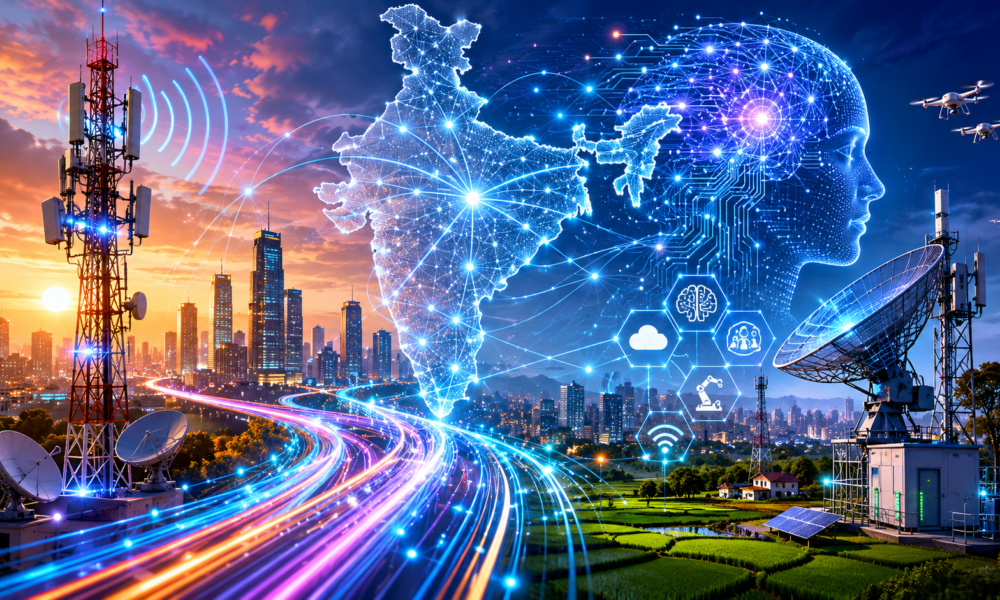
The world is witnessing a rapid boom in AI technologies. However, strong infrastructure is the basic prerequisite for AI to function. Telecom networks, fibre cables, data centres, and 5G services are gradually becoming the foundation of India’s AI economy.
AI Applications Need Robust Networks
It is a commonly known fact that AI processes huge amounts of data every second. Moreover, the technology needs fast internet and low-latency networks to work smoothly.
Without strong telecom infrastructure, AI services such as chatbots, cloud computing, and automation cannot function efficiently.
The Ministry of Communications, Government of India, has stated that telecom infrastructure is a strategic national asset and forms the foundation of India’s AI ecosystem.
Consumption of More Data Than Ever
India’s broadband subscribers have recorded an enormous jump from just 6 crore in 2014 to nearly 100 crore in 2025. According to recent estimates, mobile users in India consume more than 24 GB of data per month on average.
Moreover, India has witnessed one of the world’s fastest 5G rollouts. The growing demand for digital services is leading to a rise in internet usage and, in turn, increasing the need for digital infrastructure.
The Need for Large Data Centres
AI systems are designed to require massive computing power. This computing power comes from large data centres.
Data centres store, process, and transfer huge amounts of information. Telecom companies and technology firms are investing heavily in AI-ready data centres across India, continuing the country’s push towards becoming an AI hub.
Fibre Networks to Create Big Opportunities
Fibre cables carry large amounts of data at very high speeds. AI services require high-speed connectivity because of their massive data transfer requirements.
India, meanwhile, has deployed more than 42 lakh route kilometres of fibre across the country.
Further fibre deployment will create opportunities in telecom infrastructure and enterprise connectivity.
How Will 5G Support AI?
Many AI applications need real-time responses and therefore require low-latency networks. Emerging technologies such as smart cities, industrial automation, and autonomous systems cannot work efficiently without low-latency connectivity.
According to the India AI Impact Summit 2026, the Department of Telecommunications stated that edge computing processes data closer to users and reduces delays. Moreover, the department added that edge computing can power next-generation AI applications.
According to an Economic Times report, telecom providers are no longer just providers of voice and internet services. They are now also investing heavily in data centres and cloud infrastructure. This makes them an important part of India’s digital transformation and AI growth.
The Ministry of Communications has stated that India is entering a new phase of digital infrastructure investment. AI growth is increasing demand for data centres, fibre networks, and 5G infrastructure. Both government and private organisations are pushing investments in AI to strengthen India’s position in the global AI ecosystem.
Experts believe that robust telecom infrastructure will play a major role in India’s next phase of economic growth and technological innovation.









No Comment! Be the first one.