






Indian Railways approves ₹270 crore Kavach rollout on 631 route km of East Coast Railway
Indian Railways has approved the deployment of Kavach, its indigenous automatic train protection system, on 631 route kilometres of East Coast Railway at an estimated cost of ₹270 crore, in a fresh...

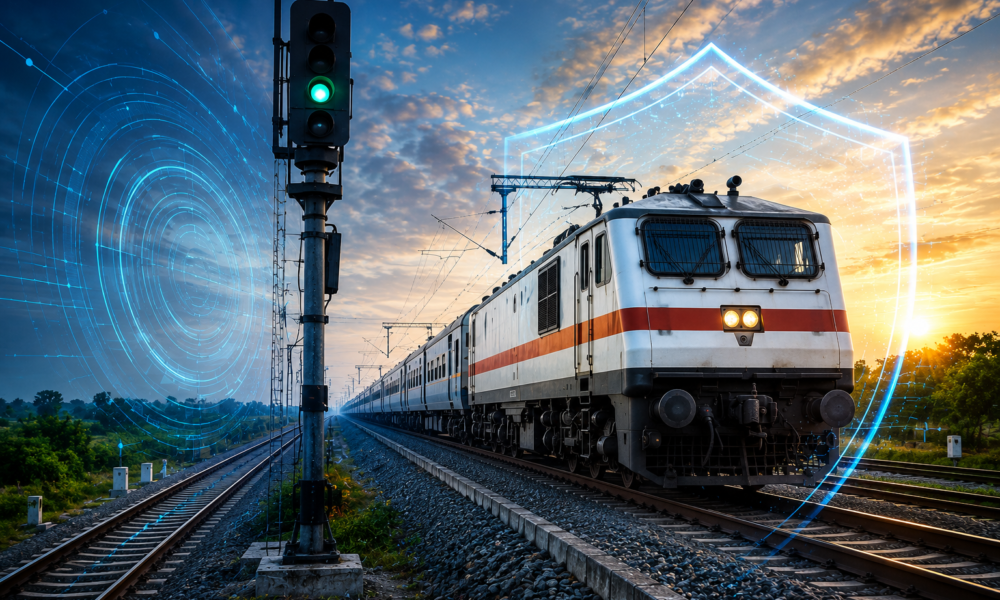
Indian Railways has approved the deployment of Kavach, its indigenous automatic train protection system, on 631 route kilometres of East Coast Railway at an estimated cost of ₹270 crore, in a fresh push to strengthen rail safety and improve operational efficiency on one of the country’s key freight and passenger corridors.
The latest approval comes as the national transporter accelerates the expansion of Kavach across high-density and high-priority routes. The system is designed to prevent collisions by continuously monitoring train movement and automatically applying brakes in situations such as signal passing at danger, overspeeding or the risk of head-on movement on the same line. The technology is being positioned as a cornerstone of Indian Railways’ safety modernisation strategy.
According to the Ministry of Railways, the East Coast Railway deployment will cover 631 route km and is aimed at enhancing both safety and reliability of operations in the zone. East Coast Railway is a strategically important network for Indian Railways, handling heavy freight movement, including coal, minerals and industrial cargo, while also serving a large passenger base across Odisha and adjoining regions. The addition of Kavach on these routes is expected to improve train handling discipline and support more efficient traffic management.
The approval also aligns with the broader nationwide expansion of Kavach. A recent government backgrounder on infrastructure said Kavach has already been deployed on 3,103 route km across the country, while implementation is underway on 24,427 km of major corridors. The system has also been installed on 4,277 locomotives, with work in progress on another 8,979 locomotives. Kavach Version 4.0 has already been commissioned on major routes such as Delhi–Mumbai, Delhi–Howrah and Prayagraj–Kanpur, underlining the government’s intent to scale the technology on busy and high-value rail stretches.
Railway officials have repeatedly described Kavach as a critical layer in the network’s transition towards technology-led safety management. Beyond accident prevention, the system is expected to support smoother operations by improving adherence to signalling protocols, reducing the scope for human error and enabling more predictable train movement across congested corridors.
The East Coast Railway project also reflects the larger transformation underway in Indian Railways. Over the past decade, the rail network has seen higher capital spending on electrification, station redevelopment, track upgrades and modern rolling stock. Government data shows railway budgetary support has risen sharply over the years, while the safety architecture of the network is being strengthened through track renewal, modern signalling and automatic protection systems such as Kavach.
For East Coast Railway, the fresh investment is significant because the zone is central to freight logistics, especially for the movement of raw materials and bulk cargo from eastern India. Safety upgrades on these routes can have a wider impact on turnaround time, punctuality and overall network resilience. With freight corridors and industrial output increasingly dependent on efficient rail movement, such investments are likely to be watched closely by both industry and infrastructure stakeholders.
The ₹270 crore Kavach approval is therefore more than a zone-level signalling upgrade. It signals the continuing shift of Indian Railways towards a digitally supervised operating environment where safety systems are expected to work alongside human control, not merely as backup, but as an active layer of protection. As the rollout spreads across more route kilometres, Kavach is set to become one of the defining technologies in the next phase of India’s railway modernisation story.






No Comment! Be the first one.