







Cabinet approves Rs 2,169 crore Ahmedabad Metro airport corridor to extend urban rail connectivity
New Delhi/Ahmedabad: The Union Cabinet has approved Phase 2A of the Ahmedabad Metro Rail Project, clearing a 6.03-km corridor from Koteshwar Road to Ahmedabad airport at an estimated cost of ₹2,169...

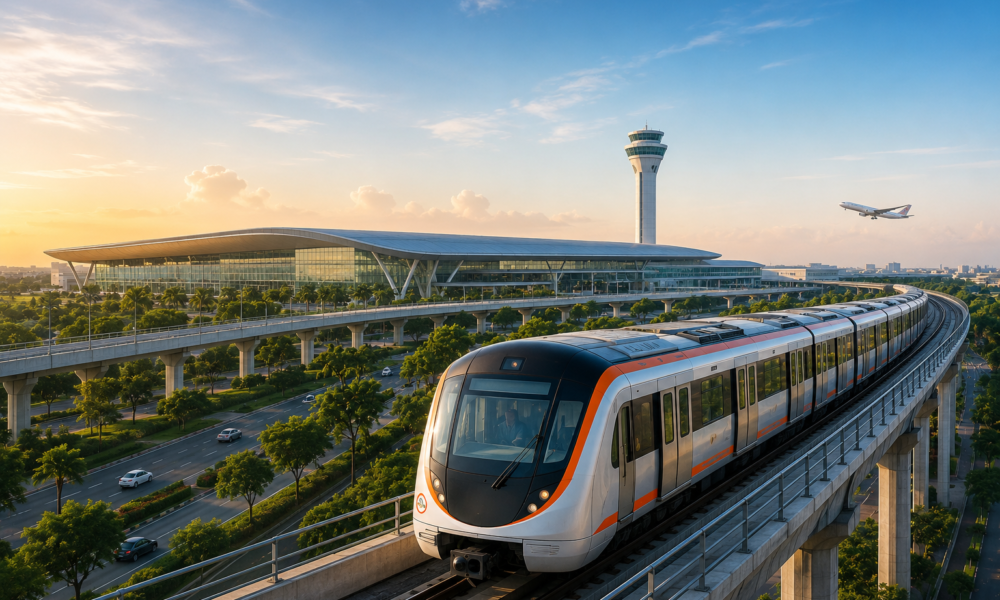
New Delhi/Ahmedabad: The Union Cabinet has approved Phase 2A of the Ahmedabad Metro Rail Project, clearing a 6.03-km corridor from Koteshwar Road to Ahmedabad airport at an estimated cost of ₹2,169 crore, in a move that is expected to strengthen airport access and expand the reach of the city’s urban rail network. The project adds another layer to Gujarat’s transport infrastructure build-out and is aimed at improving connectivity between Ahmedabad’s metro system, the airport and key emerging urban nodes.
The approved corridor will connect Koteshwar Road with the Sardar Vallabhbhai Patel International Airport and is also expected to improve access to the Sardar Patel Sports Enclave, a major development zone that has figured prominently in Gujarat’s urban planning and sporting infrastructure agenda. Officials have said the line is intended to integrate the airport more closely into the city’s public transport network while supporting travel demand from nearby residential, commercial and event-linked areas.
The decision is significant because airport connectivity has increasingly become a central objective of metro rail expansion in Indian cities, particularly where air traffic growth, urban sprawl and rising private vehicle use are putting pressure on road-based access. In Ahmedabad, the airport corridor is expected to fill a strategic gap in the metro map by extending rapid transit access to one of the city’s most important transport gateways. The project also reflects a wider planning approach in which metro systems are no longer seen only as commuter corridors inside dense city centres, but as larger urban mobility networks that connect airports, sports districts, business hubs and peripheral growth zones.
The Ahmedabad Metro has already emerged as one of the flagship urban transit projects in Gujarat, and the new approval signals continued central support for metro-led mobility infrastructure in the state. By extending the system toward the airport, the government is effectively positioning the metro as a more comprehensive transport backbone for Ahmedabad rather than a corridor-based service with limited catchment. Such expansions are increasingly important as Indian cities seek to reduce road congestion, improve last-mile connectivity and encourage a gradual modal shift toward public transport.
The corridor’s significance also extends beyond passenger convenience. Airport-linked metro infrastructure tends to influence urban development patterns, commercial activity and land values in adjoining areas, especially where large public facilities or event zones are being developed simultaneously. In this case, the airport connection is likely to be viewed not only as a mobility project but also as a support system for Ahmedabad’s broader economic and urban growth ambitions. Improved access to the airport can enhance travel reliability for business passengers, reduce pressure on road links and potentially strengthen the city’s attractiveness for investment, events and tourism.
The Cabinet approval comes amid a wider national push to expand metro rail systems across multiple cities as part of India’s infrastructure-led growth strategy. Over the past few years, metro projects have moved beyond Delhi, Bengaluru and Mumbai into a wider group of state capitals and tier-2 urban centres, with the Centre and states increasingly treating mass rapid transit as a long-term urban development instrument. Ahmedabad’s airport corridor fits squarely within that trend, combining transport utility with future city-building priorities.
For Gujarat, the project also reinforces the concentration of infrastructure investment around multimodal urban systems, where airports, metro lines, roads and major public venues are designed to work in tandem rather than in isolation. That approach is becoming more common in large Indian cities as governments attempt to align mobility planning with real estate growth, event hosting ambitions and regional economic development.
While the execution timeline and construction milestones for the Ahmedabad Metro Phase 2A corridor will be closely watched, the Cabinet clearance gives the project an important policy and funding push. For commuters, it promises a more direct public transport link to the airport. For the infrastructure sector, it marks another example of how metro expansion in India is increasingly being shaped by airport access, urban integration and the logic of long-range city planning rather than stand-alone transit expansion alone.








No Comment! Be the first one.