






Maharashtra clears ₹22,611 crore infrastructure package with MMR tunnel and Navi Mumbai Metro expansion
The Maharashtra government has approved an infrastructure package worth Rs 22,611 crore, clearing a set of transport projects that includes a major tunnel link in the Mumbai Metropolitan Region (MMR)...

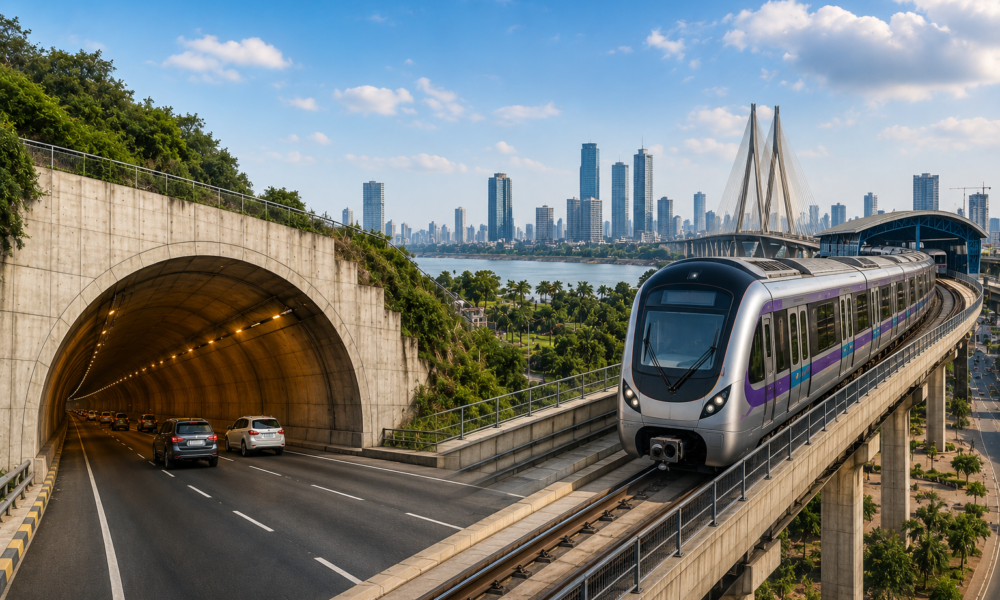
The Maharashtra government has approved an infrastructure package worth Rs 22,611 crore, clearing a set of transport projects that includes a major tunnel link in the Mumbai Metropolitan Region (MMR) and the expansion of the Navi Mumbai Metro network. The decision marks one of the state’s bigger recent capital pushes in urban mobility and regional transport infrastructure, with the approved projects aimed at easing congestion, improving intra-city connectivity and supporting the long-term expansion of the Mumbai metropolitan transport grid.
According to recent reports, the approved package includes a tunnel and elevated corridor project intended to strengthen east-west and north-south connectivity within the wider MMR, alongside metro expansion works in Navi Mumbai. While Mumbai and its surrounding urban belt have seen a steady pipeline of metro, road and bridge projects in recent years, the latest clearance is significant because it combines multiple high-value interventions under a single state-level infrastructure push rather than treating them as isolated transport upgrades.
The move comes at a time when the MMR is under mounting pressure from rapid urban growth, long commute times and heavy dependence on already saturated suburban rail and road corridors. Navi Mumbai, in particular, is increasingly being positioned as both an urban growth centre and a relief valve for Mumbai’s density, with major investments already under way in the Navi Mumbai International Airport, road corridors and metro rail. Expanding the metro network in Navi Mumbai is expected to improve internal mobility across the satellite city and support stronger integration with the broader metropolitan region. At the same time, new tunnel and corridor projects in the MMR are aimed at cutting travel times and improving network resilience in a region where geography, built density and traffic demand make surface transport expansion particularly difficult.
The package also reflects a wider planning trend in Indian metropolitan infrastructure: the shift from single-mode transport projects to multi-layered mobility systems where metro lines, tunnels, elevated roads, suburban rail and airport access corridors are developed in tandem. In Mumbai’s case, that approach is becoming increasingly necessary because the city’s mobility challenges can no longer be addressed through one transport mode alone. Metro rail is expanding rapidly, but road bottlenecks, inter-suburban travel gaps and connectivity between emerging nodes such as Navi Mumbai, Thane and the island city continue to require parallel investments in roads and grade-separated corridors.
For the state government, the approval is also a signal of continued emphasis on infrastructure-led urban development as a core economic strategy. Large transport projects in the MMR carry value beyond commuter convenience: they shape land use, influence commercial development, affect logistics efficiency and often determine the viability of new business and residential districts. In the Navi Mumbai context, better metro connectivity could strengthen the city’s role as a complementary urban centre to Mumbai, especially as airport-linked development, office clusters and housing projects gather pace.
The timing of the decision is notable because it comes amid a broader national push for transport infrastructure spending across metros, regional cities and industrial corridors. The Centre has continued to prioritise highways, rail modernisation, airport development and metro systems as part of its infrastructure agenda, while states such as Maharashtra have increasingly pursued their own large urban transport packages to keep pace with population growth and investment demand. Official government data released earlier this month also underlined the scale of ongoing infrastructure expansion across roads, rail and regional connectivity networks nationwide.
For the Mumbai region, however, the significance of the ₹22,611 crore package lies in its attempt to address a familiar but unresolved problem: how to keep one of India’s most economically important urban regions moving as it grows more crowded, more decentralised and more infrastructure-hungry. If implemented on schedule, the approved projects could improve connectivity between emerging growth clusters and reduce some of the structural friction that defines travel across the metropolitan region.
While project timelines, funding structures and execution progress will be closely watched, the approval itself is a major policy signal. It indicates that Maharashtra is continuing to bet heavily on transport infrastructure as the backbone of metropolitan growth, with Navi Mumbai Metro expansion and new MMR corridor works forming part of a much larger effort to redesign mobility in and around India’s financial capital.






No Comment! Be the first one.