





Centre revives Qadian-Beas railway line project after nearly a century to strengthen connectivity in Punjab
The Union government has revived the long-pending Qadian-Beas railway line project in Punjab, breathing new life into a rail link that had remained stalled for decades and is now being positioned as...

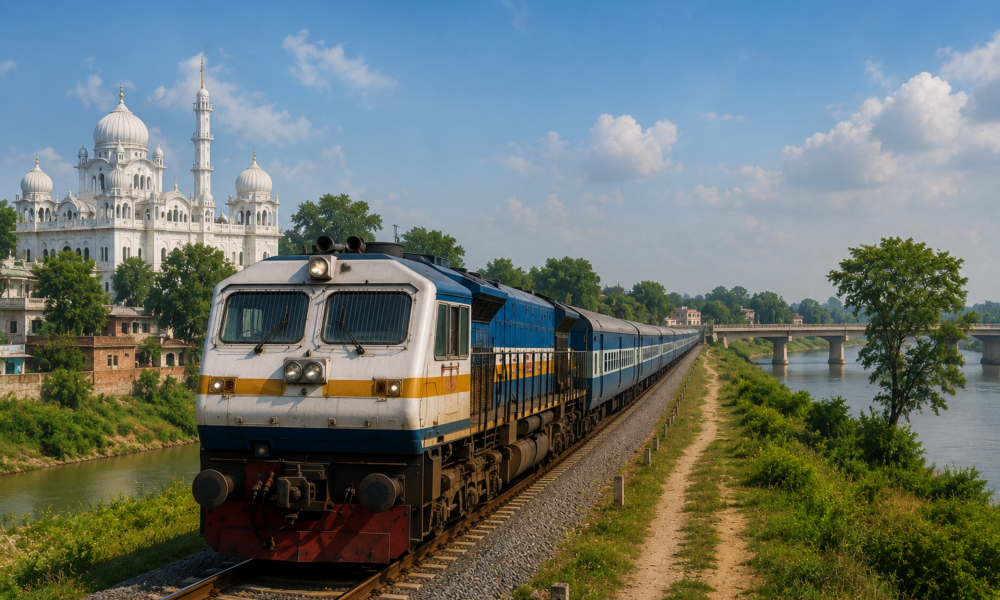
The Union government has revived the long-pending Qadian-Beas railway line project in Punjab, breathing new life into a rail link that had remained stalled for decades and is now being positioned as an important regional connectivity intervention in the state’s Majha belt. The project, which had originally been conceived nearly a century ago, is expected to improve access between Qadian in Gurdaspur district and Beas in Amritsar district, while also supporting passenger mobility, local trade and broader rail integration in northern Punjab.
The revival of the line is significant because it brings back into focus a corridor that has long been discussed in the region but never fully materialised. According to recent reports, the project has now received fresh central attention as part of a wider effort to strengthen rail infrastructure and improve last-mile and inter-district connectivity in underserved pockets. Once developed, the rail link is expected to connect important population centres in the Majha region more efficiently with the wider railway network, potentially reducing travel time and improving transport options for residents who currently rely heavily on road-based travel.
The Qadian-Beas line matters not just as a transport project, but as a regional infrastructure measure with social and economic implications. Qadian is a historically important town and a recognised religious centre that attracts visitors from India and abroad. A direct or better-integrated railway connection to Beas, which sits on a more established rail route, could improve accessibility for pilgrims, local residents, students and small traders while also making movement between Gurdaspur and Amritsar districts easier. In regions where road connectivity exists but rail penetration remains limited, such projects often carry disproportionate importance because they alter the long-term transport map rather than merely add capacity to an already well-served corridor.
The move also aligns with the Centre’s recent emphasis on rail-led infrastructure expansion as a tool for regional development. Over the past year, the government has repeatedly highlighted railway capacity addition, multitracking, station redevelopment and safety upgrades as core parts of its infrastructure strategy. Official data released this month shows that railway expansion and modernisation continue to occupy a central place in India’s broader transport build-out, alongside highways, metro systems and airport development.
For Punjab, the revival of the Qadian-Beas line could carry particular value because rail projects in the state are often judged not only by passenger traffic but also by their ability to connect agricultural, semi-urban and religious centres more effectively. The Majha region has a dense settlement pattern, a strong agrarian base and multiple towns with local economic significance, yet some transport corridors remain less integrated with the national rail grid than major trunk routes elsewhere. By reviving a long-pending line in this geography, the government appears to be signalling that smaller but regionally strategic railway links remain part of the infrastructure agenda, even amid headline-grabbing megaprojects in metros and freight corridors.
The timing of the move is also notable. Across India, infrastructure policy has increasingly shifted toward a mix of large national corridors and smaller connectivity projects that plug historical gaps in the transport network. In that context, the Qadian-Beas line represents the second category: a project that may not command the scale of a dedicated freight corridor or metro expansion, but could still reshape mobility for the communities it serves. Such lines often carry value beyond their route length, particularly in regions where rail access has lagged behind population needs or economic potential.
While detailed timelines, execution milestones and cost contours of the revived project will be watched closely, the decision to bring the Qadian-Beas railway line back onto the infrastructure agenda marks a notable development for Punjab’s transport map. For residents of the Majha region, it revives hopes of a rail link that has remained elusive for generations. For the infrastructure sector, it is a reminder that India’s rail expansion story is not only about high-speed upgrades and mega-capex corridors, but also about unfinished local links that can still transform regional connectivity when finally brought back on track.






No Comment! Be the first one.