







NBCC to Redevelop Seven Government Residential Colonies in Delhi with Modern Housing and Office Infrastructure
The National Buildings Construction Corporation (NBCC) is moving ahead with one of the largest government redevelopment programmes in the capital, transforming seven General Pool Residential...

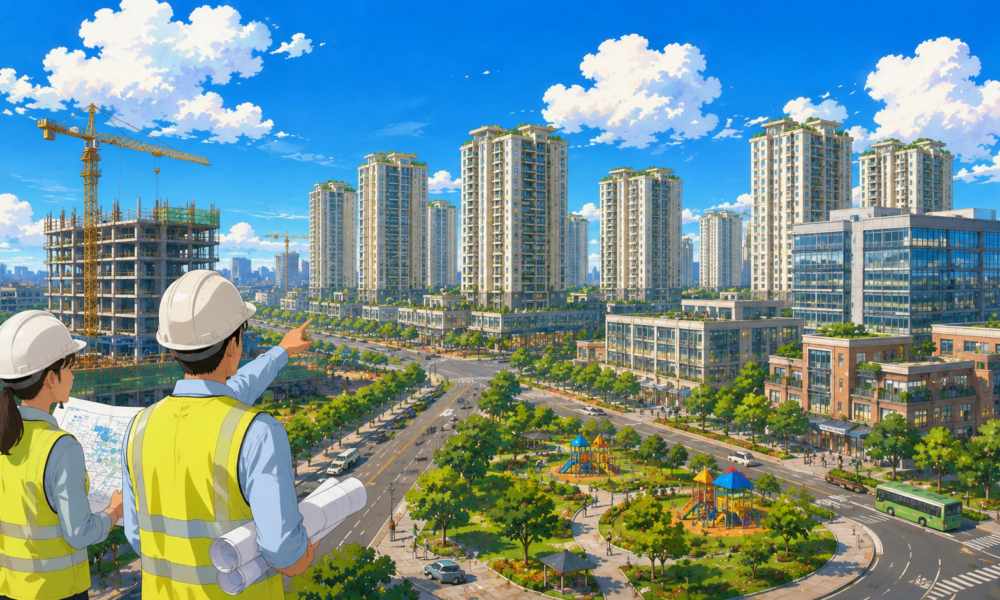
The National Buildings Construction Corporation (NBCC) is moving ahead with one of the largest government redevelopment programmes in the capital, transforming seven General Pool Residential Accommodation (GPRA) colonies into modern residential and office infrastructure. The large-scale urban renewal initiative is expected to deliver more than 21,000 modern government homes alongside upgraded public facilities, commercial spaces and office infrastructure, while generating significant employment during construction.
The redevelopment project forms part of the government’s wider plan to modernise ageing public infrastructure across Delhi. Several of the older residential colonies were built decades ago and no longer meet present-day standards for sustainability, accessibility or urban planning. Through the new development, these locations will be replaced with energy-efficient buildings, better road networks, landscaped public areas and improved civic amenities.
According to NBCC, the seven-colony redevelopment will create more than 21,000 residential units with a built-up area of approximately 65.42 lakh square metres. Alongside housing, the project also includes schools, healthcare facilities, community centres, parking infrastructure, green spaces and commercial developments designed to support daily urban life. The integrated planning approach aims to create self-sufficient neighbourhoods rather than standalone housing complexes.
A key feature of the redevelopment is the addition of modern office infrastructure through the proposed Bharat Business Park. The office towers are expected to provide contemporary workspace for government and commercial use while helping finance the redevelopment through the monetisation of commercial built-up areas. This self-financing model reduces the financial burden on the government while allowing long-term infrastructure upgrades to move forward.
The project is also expected to make a significant contribution to employment. NBCC estimates that construction activities have already generated over 3.55 crore man-days of work, supporting engineers, architects, contractors, suppliers and thousands of skilled and semi-skilled workers. Large redevelopment programmes such as this also create demand across cement, steel, electrical equipment, construction technology and urban services, producing wider economic benefits.
Sustainability remains central to the redevelopment strategy. The new buildings are planned with modern energy-efficient designs, improved water management systems and enhanced green spaces that support healthier urban environments. Wider internal roads, organised parking and upgraded public infrastructure are expected to improve mobility while reducing congestion within the redeveloped colonies.
Urban redevelopment has become an increasingly important segment of India’s infrastructure growth story. Rather than expanding cities outward, governments are now focusing on replacing ageing public assets with modern, high-density developments that make better use of existing land and infrastructure. This approach not only improves living standards but also strengthens long-term urban resilience.
For the infrastructure sector, the NBCC redevelopment demonstrates how housing, commercial infrastructure and public facilities can be integrated into a single development model. As Indian cities continue to modernise, projects of this scale are likely to play an important role in improving urban infrastructure while supporting employment, sustainability and efficient land utilisation.






No Comment! Be the first one.