






India’s Rising AI and Data Centre Boom Set to Push Peak Power Demand to 300 GW by 2027
India’s rapid expansion of data centres, artificial intelligence infrastructure and electric vehicle adoption is set to transform the country’s power landscape. According to Union Power...

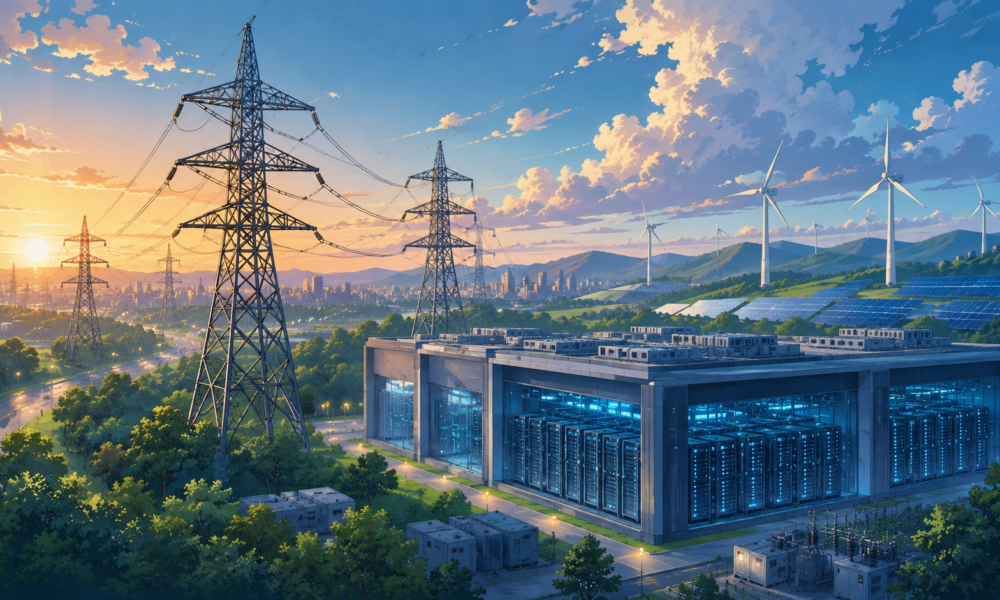
India’s rapid expansion of data centres, artificial intelligence infrastructure and electric vehicle adoption is set to transform the country’s power landscape. According to Union Power Minister Manohar Lal, India’s peak electricity demand is expected to touch 300 GW by 2027, marking a significant jump from current levels. The announcement highlights how digital infrastructure is becoming one of the biggest drivers of India’s energy demand.
The surge reflects the country’s growing position as a global digital economy. Investments in hyperscale data centres, AI computing facilities and cloud infrastructure are accelerating across several states as global technology firms continue to expand their presence in India. These facilities require uninterrupted electricity around the clock, making reliable power infrastructure a critical part of future development.
Industry experts believe that artificial intelligence is changing the way data centres operate. Unlike conventional cloud computing, AI workloads require high performance processors and significantly greater electricity consumption. As organisations deploy generative AI applications, demand for computing capacity continues to rise, leading to larger campuses and higher power requirements.
The increase in electricity demand is not being driven by data centres alone. India’s growing fleet of electric vehicles, expansion of digital services, increasing internet usage and rapid industrialisation are all contributing to higher energy consumption. Together, these sectors are creating sustained demand for stronger transmission networks, additional generation capacity and modern grid infrastructure.
Meeting a peak demand of 300 GW will require significant investment across the electricity value chain. New power generation projects, renewable energy installations, battery storage systems and transmission corridors will all play an important role in ensuring uninterrupted supply. Power distribution companies will also need to strengthen local networks to support the growing number of energy intensive facilities coming online.
For the data centre industry, reliable electricity has become as important as land availability and fibre connectivity. Developers increasingly look for locations that offer stable power supply, access to renewable energy and supportive government policies. This has encouraged several states to introduce dedicated policies aimed at attracting digital infrastructure investments.
The trend is also creating opportunities beyond technology companies. Engineering firms, EPC contractors, renewable energy developers, power equipment manufacturers, cooling solution providers and electrical infrastructure specialists are expected to benefit from the next wave of investments. Every new hyperscale data centre requires extensive supporting infrastructure, from substations and transmission lines to backup power systems and water management facilities.
India’s ambition to become a global AI and cloud computing hub will therefore depend not only on digital investments but also on its ability to deliver dependable and sustainable electricity. As more AI platforms, cloud services and digital applications are deployed across industries, power infrastructure will become one of the country’s most important strategic assets.
For the infrastructure sector, the message is clear. The future of digital growth will be powered as much by electricity networks as by servers and software. Building resilient, efficient and sustainable energy infrastructure will be essential if India is to support the next phase of its digital economy while maintaining reliable power for industries, businesses and households alike.




No Comment! Be the first one.