








Gujarat Unveils New Data Centre Policy, Targets 7.5 GW Capacity to Accelerate India’s Digital Infrastructure
India’s race to build world class digital infrastructure has gathered fresh momentum after Gujarat announced a new Data Centre Policy aimed at attracting hyperscale operators and large...


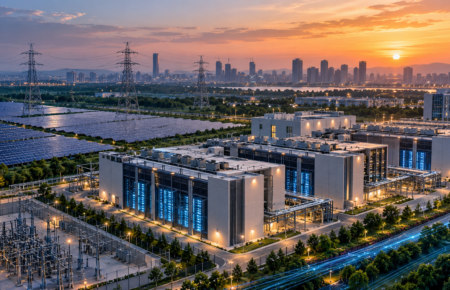
India’s race to build world class digital infrastructure has gathered fresh momentum after Gujarat announced a new Data Centre Policy aimed at attracting hyperscale operators and large technology investments. The policy sets an ambitious target of developing 7.5 GW of data centre capacity, placing Gujarat among the leading states competing for India’s rapidly expanding digital economy.
The announcement comes at a time when demand for artificial intelligence, cloud computing, digital payments, online services and enterprise data storage is growing at an unprecedented pace. Industry experts believe the next phase of India’s infrastructure story will not be driven only by roads, airports and industrial parks, but also by digital assets such as data centres, fibre networks and power infrastructure.
Under the new policy, Gujarat plans to offer several incentives to investors, including support for land acquisition, power infrastructure and faster approvals through a single window clearance system. These measures are expected to reduce project timelines while encouraging both domestic and global companies to establish large facilities in the state.
India has emerged as one of the world’s fastest growing data centre markets. Rising internet usage, increasing adoption of artificial intelligence, stricter data localisation requirements and rapid cloud migration have significantly increased demand for high performance digital infrastructure. According to recent industry estimates, India’s share of the global data centre market is expected to rise steadily over the coming years as fresh investments continue to flow into the sector.
The growth of data centres also creates opportunities beyond the technology sector. Every large campus requires civil construction, electrical systems, cooling infrastructure, steel, specialised engineering, renewable energy integration and long term facility management. This makes the sector an important growth engine for construction companies, infrastructure developers, EPC contractors and equipment manufacturers.
Reliable electricity remains one of the biggest requirements for the industry. The Union government recently projected that India’s peak power demand could touch 300 GW by 2027, driven largely by artificial intelligence, electric vehicles and data centres. This has increased the focus on expanding transmission networks, energy storage and renewable power generation to support future digital infrastructure.
Several states are now competing to become India’s preferred destination for digital infrastructure investment. Maharashtra, Tamil Nadu, Uttar Pradesh and Telangana have already announced dedicated policies or attracted major investments, while Gujarat’s latest policy strengthens its position in this competitive landscape. Access to industrial land, renewable energy resources, ports and manufacturing ecosystems could provide the state with an advantage as demand for hyperscale facilities continues to increase.
For India’s infrastructure sector, the implications extend well beyond technology. Every new data centre campus generates demand for roads, utilities, substations, water systems, logistics, housing and commercial development around project locations. As digital infrastructure becomes increasingly critical to economic growth, investments in supporting physical infrastructure are expected to accelerate across multiple sectors.
The policy also reflects a broader shift in India’s infrastructure priorities. Alongside highways, airports and metro rail projects, digital infrastructure is becoming a strategic national asset capable of supporting economic growth, innovation and future employment. Gujarat’s latest initiative signals that the competition to build India’s digital backbone is only beginning.
| Category | Details |
|---|---|
| Headline | Institutional Investments in Indian Real Estate Hit Record $4.1 Billion in H1 2026, Driven by Domestic and Global Capital |
| Source | Vestian Report |
| Reporting Period | January to June (H1) 2026 |
| Total Institutional Investment | US$4.1 billion |
| Year-on-Year Growth | 58% |
| Investment in H1 2025 | US$2.6 billion |
| Increase in Value | US$1.5 billion |
| Highest Since | Covid-19 pandemic |
| Q2 2026 Investment | US$2.7 billion |
| Q2 YoY Growth | 49% |
| Key Drivers | Strong domestic capital deployment, revival in foreign investor participation, expansion of Global Capability Centres (GCCs) |
| Most Preferred Asset Class | Commercial Real Estate |
| Major Investor Groups | Domestic institutional investors and foreign institutional investors |
| Expert Quote | Vestian CEO Shrinivas Rao said investor confidence has strengthened due to diversification across asset classes and improving economic conditions. |
| Industry View | Golden Growth Fund CEO Ankur Jalan said the surge reflects confidence in India’s long-term economic fundamentals, regulatory transparency and resilient income-generating assets. |
| Impact on Infrastructure | Higher demand for commercial developments, office projects, logistics parks, mixed-use developments and supporting infrastructure. |
| Market Outlook | Institutional investment is expected to remain strong as geopolitical and economic uncertainties ease. |








No Comment! Be the first one.