








Cabinet’s ₹2.19 Lakh Crore Push Signals Next Phase of India’s Infrastructure Growth
India’s infrastructure and manufacturing sectors are set for another major boost after the Union Cabinet approved a series of projects and policy initiatives worth more than ₹2.19 lakh crore....


India’s infrastructure and manufacturing sectors are set for another major boost after the Union Cabinet approved a series of projects and policy initiatives worth more than ₹2.19 lakh crore. The decisions span transport infrastructure, semiconductor manufacturing, electronics production and fertiliser, reflecting the government’s continued focus on strengthening the country’s economic foundation.
For the infrastructure sector, the biggest takeaway is the continued investment in multimodal connectivity. Two large highway projects in Varanasi, along with two railway expansion projects in Odisha and Jharkhand, are expected to improve freight movement, reduce travel time and support regional development.
The Varanasi projects aim to transform mobility in one of India’s fastest growing religious and tourism hubs. Together, the elevated corridors along the Ganga and Varuna riverbanks will improve access to highways, railway stations, airports and inland waterways while easing traffic congestion across the city. The projects will also support the PM Gati Shakti National Master Plan by strengthening connections between different modes of transport.
The railway sector also received fresh investment with the approval of the doubling of the Paradeep to Haridaspur railway line in Odisha and the construction of a fourth railway line between Dangoaposi and Rajkharsawan in Jharkhand.
These projects are expected to increase line capacity, improve operational efficiency and strengthen freight movement from key mining, industrial and port regions. Better rail connectivity will help industries transport raw materials and finished products more efficiently while reducing logistics costs.
Beyond transport, the Cabinet’s decisions reinforce India’s ambition to become a global manufacturing destination.
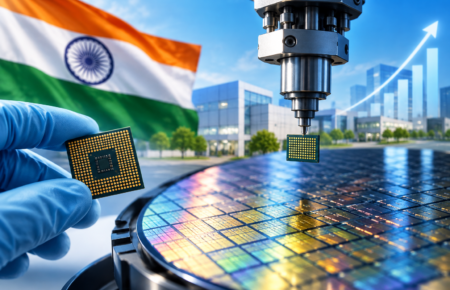
The approval of the Semicon 2.0 Mission, with an outlay of ₹1.27 lakh crore, is expected to accelerate domestic semiconductor production and attract fresh investment into the country’s electronics ecosystem. At the same time, the second phase of the Mobile Phone Manufacturing Scheme aims to strengthen India’s position as one of the world’s leading smartphone manufacturing hubs.
Another significant announcement was the approval of the National Investment Policy for Urea 2026. The policy will support the establishment of nine new urea plants, helping increase domestic fertiliser production and reduce dependence on imports. The move is expected to strengthen agricultural supply chains while supporting long term food security.
For the construction and infrastructure industry, these announcements are likely to generate sustained demand across multiple sectors. Highway and railway projects will require large quantities of steel, cement, construction machinery and engineering services, creating opportunities for contractors, developers and equipment manufacturers.
The projects are also expected to generate employment during both construction and operation while encouraging investment in surrounding regions through improved connectivity and industrial development.
Rather than focusing on a single sector, the latest Cabinet approvals demonstrate a broader strategy that combines transport infrastructure, manufacturing and industrial growth. By investing simultaneously in roads, railways, semiconductors, electronics and fertiliser, the government is seeking to build stronger infrastructure while supporting India’s long term economic competitiveness.
As these projects move from approval to execution, they are expected to play an important role in improving connectivity, strengthening supply chains and creating new opportunities for businesses across the infrastructure ecosystem.







No Comment! Be the first one.