








India’s New Infrastructure Dashboard Signals Faster Delivery Across Roads, Rail, Ports and Power
India’s infrastructure sector is showing strong momentum across multiple sectors, with the latest government performance dashboard highlighting steady gains in transport, logistics, energy and...

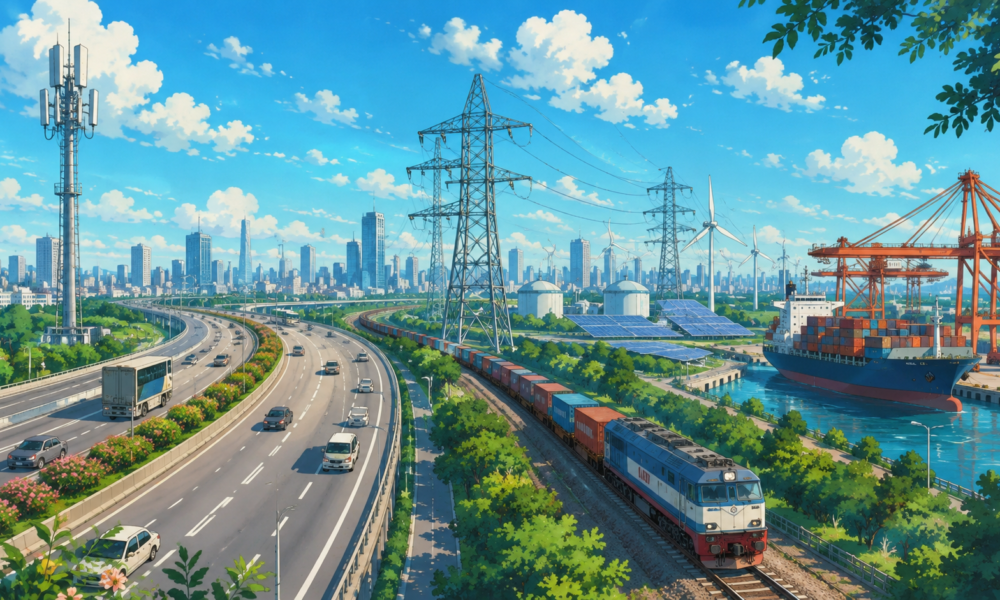
India’s infrastructure sector is showing strong momentum across multiple sectors, with the latest government performance dashboard highlighting steady gains in transport, logistics, energy and digital connectivity. The quarterly update released by the Ministry of Statistics and Programme Implementation (MoSPI) through the PAIMANA Performance Monitoring Dashboard presents a clearer picture of how major infrastructure assets are expanding while improving operational efficiency.
The data suggests that infrastructure development is moving beyond project announcements towards measurable outcomes. National highways continued to expand, rail freight became more efficient, inland waterways strengthened cargo movement, while civil aviation and telecommunications recorded healthy growth. The dashboard is designed to improve transparency and help policymakers monitor performance across India’s critical infrastructure sectors.
One of the biggest highlights comes from the highways sector. India constructed 9,360 kilometres of National Highways during FY2025-26, strengthening road connectivity across states. Digital toll collection also accelerated, with electronic toll transactions increasing significantly, reflecting wider adoption of cashless mobility and improved traffic flow on major corridors. These developments are expected to reduce congestion while making freight movement more predictable for logistics operators.
Railways also continued to improve operational efficiency. The average freight carried by each broad gauge wagon reached record levels, while the national railway network expanded to more than 1.37 lakh track kilometres. Higher carrying capacity allows Indian Railways to move more cargo using the same assets, supporting lower logistics costs and greater supply chain efficiency.
India’s maritime sector is also witnessing steady progress. The country’s fleet expanded to 1,592 vessels, while navigable inland waterways increased to more than 29,000 kilometres. Coastal cargo movement and inland water transport continue to support multimodal logistics, reducing dependence on road transport for long distance freight. These improvements align with the government’s broader logistics integration strategy.
The power sector is preparing for the next phase of renewable energy expansion through large scale energy storage. Government projections indicate substantial growth in both Pumped Storage Plants and Battery Energy Storage Systems over the coming decade. These investments will play a vital role in maintaining grid stability as renewable energy capacity continues to rise across the country.
Telecommunications infrastructure also maintained strong growth. Mobile tower installations, Base Transceiver Stations and data consumption all increased, reflecting rising digital connectivity across urban and rural India. Better telecom infrastructure supports smart cities, digital services, industrial automation and future infrastructure management systems.
Civil aviation delivered encouraging results as well. Passenger traffic and cargo handling recorded double digit growth during the latest reporting period, while the number of operational airports continued to expand. The aviation sector remains an important contributor to trade, tourism and regional economic development.
Industry experts believe the PAIMANA dashboard could become an important tool for tracking execution rather than simply measuring investment. With regular quarterly updates, stakeholders including developers, investors, contractors and policymakers will have access to performance indicators that support better planning and evidence based decision making. As India continues its infrastructure expansion, measurable progress across sectors will be increasingly important in attracting investment and improving project delivery.






No Comment! Be the first one.