


From Noida to Kolkata: India’s New Infrastructure Corridors
India is rapidly expanding its infrastructure and real estate landscape, developing a network of major economic corridors across the country. It is developing world-class airports and expanding their...


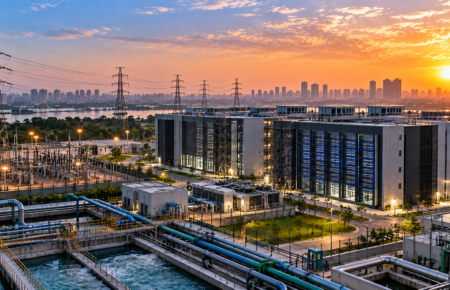
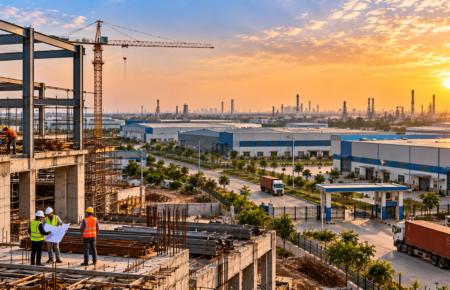
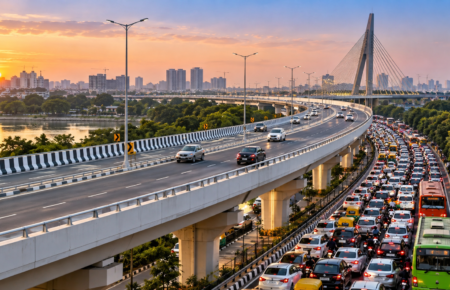
India is rapidly expanding its infrastructure and real estate landscape, developing a network of major economic corridors across the country. It is developing world-class airports and expanding their connectivity to link more cities and economic centres. In addition, new expressways and motorways are being built to make travel faster and smoother. Metro networks, often described as the lifelines of cities, are expanding to improve urban mobility. India is also upgrading railway lines, stations and trains while adding new rail corridors. At the same time, companies are building large-scale facilities to store and process internet data. Large industrial regions are also being developed for factories, warehouses and businesses, creating integrated economic zones.
Four major development corridors are being highlighted: the first is the Noida–Greater Noida corridor, which includes airports, expressways, metro networks, data centres and real estate development. The second is the Delhi–Mumbai corridor, which includes expressways, industrial development and logistics infrastructure. The third is the Mumbai–Pune corridor, which includes metro expansion, industrial development and IT infrastructure. The fourth is Bengaluru, where airports, metro networks, IT parks and data centres are driving infrastructure and economic growth.
Noida–Greater Noida
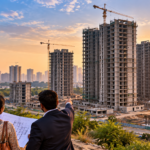
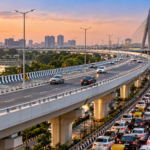
The main infrastructure story is the Noida–Greater Noida Expressway, which includes the development of roads, junctions, underpasses, connectivity projects and surrounding residential developments along the corridor. The wider area is also gaining connectivity from major projects such as the Noida International Airport and new expressway links.
The Yamuna Expressway region is emerging as a major manufacturing hub, with around ₹12,000 crore in investments across eight companies, including HCL-Foxconn, Havells and Escorts-Kubota, expected to create around 22,000 jobs.
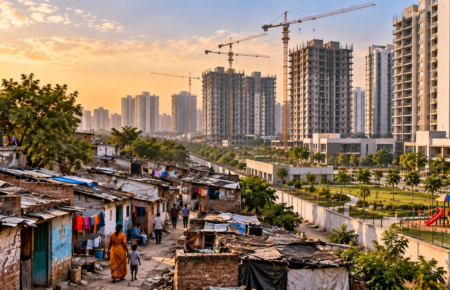
The biggest change is improved connectivity between Noida, Greater Noida and surrounding economic centres. This means better roads, easier mobility and greater opportunities for large businesses to expand. Over time, this could increase demand for offices, warehouses and housing.
The main beneficiaries are expected to be large businesses, as improved transport can make logistics more efficient. Logistics companies can move goods more easily, while real estate developers can benefit from improved connectivity and greater development potential. Residents of Noida and Greater Noida could also benefit as employment opportunities and services become more accessible.
Industrial companies and investors are also likely to benefit from better access to the wider NCR and new investment opportunities. The Noida–Greater Noida Expressway is more than just a road. It has become the backbone of a larger development corridor connecting residential areas, offices, industry, logistics and new infrastructure such as the Noida International Airport.
Delhi–Mumbai Expressway
The Delhi–Mumbai Expressway is a major road infrastructure project planned to span approximately 1,386 km. With eight lanes, it connects Delhi with Mumbai through Haryana, Rajasthan, Madhya Pradesh and Gujarat. It will provide connectivity to major cities and economic centres, including Jaipur, Kota, Indore, Surat, Bhopal and Vadodara.
The expressway is designed to substantially reduce travel time between Delhi and Mumbai, with the government estimating that the journey could be reduced from around 24 hours to approximately 12 hours.
For the Delhi–Mumbai Expressway, the government has cited an estimated project cost of around ₹1 lakh crore, while earlier Bharatmala project documents put the total capital cost at approximately ₹1,01,420 crore.
The corridor is expected to support industries such as electronics, electric vehicles, pharmaceuticals, renewable energy and automotive manufacturing. The main beneficiaries are expected to include large-scale manufacturers, logistics companies and workers.
Improved connectivity could also increase demand for industrial land, warehouses, commercial spaces and housing along the corridor. The larger question is whether the Delhi–Mumbai corridor can become one of India’s biggest new economic engines.
Chennai–Bengaluru Industrial Corridor
The Chennai–Bengaluru Industrial Corridor (CBIC) connects the industrial economies of Tamil Nadu, Karnataka and Andhra Pradesh, forming a broader economic belt across the Chennai–Bengaluru region.
Government sources describe the corridor as a roughly 600-km stretch around the Krishnapatnam–Tumakuru region, while Andhra Pradesh’s industrial-corridor agency describes the wider Chennai–Bengaluru–Chitradurga influence area as approximately 560 km.
The corridor is designed to strengthen manufacturing, logistics and industrial development by connecting industrial nodes with motorways, railways, ports and other supporting infrastructure.
Amritsar–Kolkata Industrial Corridor
The Amritsar–Kolkata Industrial Corridor (AKIC) is a major industrial development programme designed to create manufacturing and logistics hubs across northern and eastern India.
The corridor broadly follows the Eastern Dedicated Freight Corridor (EDFC), connecting the northern industrial belt with eastern India and Kolkata. Its industrial nodes are being developed to support manufacturing, logistics and related economic activity.
The Hisar Integrated Manufacturing Cluster in Haryana covers approximately 2,988 acres. The project has an estimated cost of ₹4,680 crore, an investment potential of ₹32,417 crore and the potential to create around 1.25 lakh jobs.
The Union Budget has also announced an integrated East Coast Industrial Corridor with a node at Durgapur. The Delhi–Nagpur Industrial Corridor (DNIC) is another proposed north-central industrial connection, although it is currently less developed than several of the other industrial-corridor projects.
What’s Next?
The next phase will depend on how quickly planned investments translate into construction, how effectively different modes of transport are integrated and whether private companies establish manufacturing and logistics facilities along these corridors. As industrial activity expands, surrounding areas could see increased demand for warehouses, commercial spaces, housing, hotels and other services. The development of these corridors could therefore create new economic centres beyond India’s traditional metropolitan regions.
India’s next generation of industrial corridors is creating a new economic geography beyond its traditional metropolitan centres. From the East Coast and Odisha to Hyderabad, Bengaluru, Maharashtra and the northern industrial belt, these projects are bringing together manufacturing clusters, freight networks, ports, motorways and modern industrial cities. As infrastructure improves and private investment follows, these corridors could create new employment hubs, strengthen domestic manufacturing, boost exports and generate demand for warehouses, commercial spaces, housing and supporting services. The larger shift is clear: India is moving from isolated industrial zones towards a connected network of manufacturing and logistics hubs that could become major engines of economic growth over the next decade.



No Comment! Be the first one.