







Patna Metro Moves Underground: ₹121 Crore Electrical Works Push Project Ahead
Patna Metro is moving into another important stage of construction, with work on the underground section now moving towards electrical and traction systems. The development comes after a major...

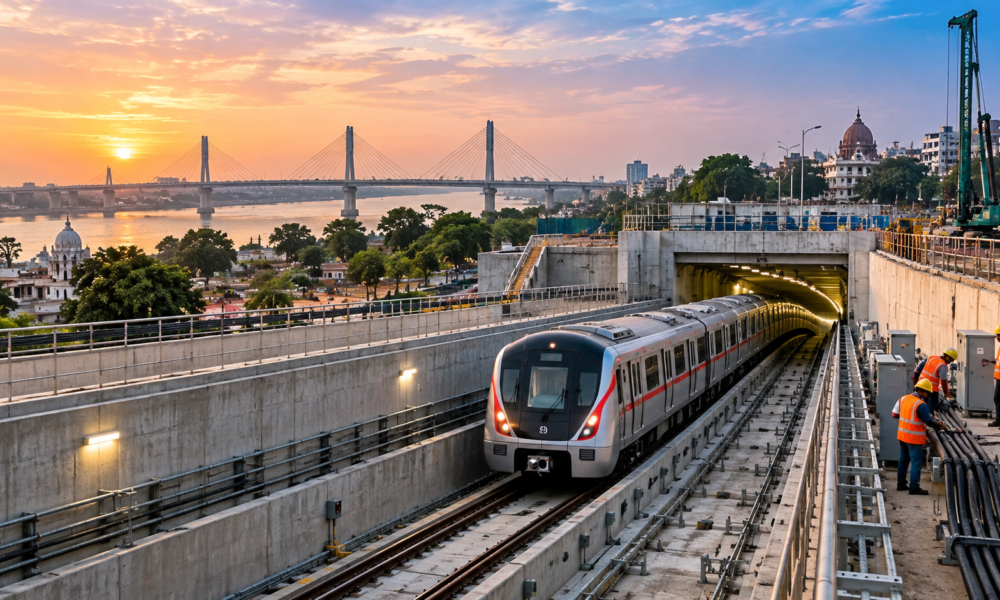
Patna Metro is moving into another important stage of construction, with work on the underground section now moving towards electrical and traction systems. The development comes after a major tunnelling milestone earlier this month, bringing the Bihar capital closer to a larger metro network.
The Delhi Metro Rail Corporation (DMRC) has invited bids for electrical and traction works for the underground section of Patna Metro Corridor 2. The estimated value of the package is ₹121.12 crore, including GST. The work will cover the design, supply, installation, testing and commissioning of key electrical systems needed to operate metro trains.
The package includes a 25 kV AC rigid overhead equipment system, 33 kV auxiliary substations and related cabling. These systems are important because a metro line needs a reliable power supply not only to run trains but also to support stations and other operations.
The contract is expected to take 24 months to complete. DMRC has invited eligible companies to submit bids, with the submission window running from 23 September to 30 September 2026. The bids are scheduled to be opened on 1 October.
The electrical work follows progress on the underground tunnels. On 1 September, Patna Metro Rail Corporation Limited (PMRCL) announced the ninth tunnel boring machine breakthrough under Package PC-03. The milestone completed a 5.2-km underground tunnelling stretch between Moin-ul-Haq Metro Station and Patna Junction Metro Station on the up line. It was also the final breakthrough of the tunnel boring machine on this stretch.
Corridor 2 is planned to connect Patna Railway Station with New ISBT. The corridor is 14.45 km long, with 9.9 km planned as elevated and 4.55 km underground. It will have 12 stations, including locations such as Gandhi Maidan, Rajendra Nagar, Transport Nagar, Mahatma Gandhi Setu and ISBT.
The larger Patna Metro project was approved by the Union Cabinet in 2019 at an estimated cost of ₹13,365.77 crore. The project has two main corridors designed to connect important parts of the city and improve public transport. The original plan also included links with railway stations and the ISBT, along with feeder services and other forms of public transport.
For Patna, the metro is more than another transport project. Better connectivity can reduce dependence on road travel and make movement across busy parts of the city easier. Connections with railway and bus terminals can also help passengers move between different modes of transport.
The underground section is particularly important for a growing city because it allows metro lines to pass through busy areas without taking up additional road space. However, underground construction also brings higher engineering and safety requirements, making the completion of tunnelling only one part of the larger project.
The latest progress shows that Patna Metro is moving from civil construction towards the systems needed to make the railway operational. Tunnels, tracks, power supply, stations, signalling and passenger facilities must all come together before a metro corridor can begin full operations.
The project is therefore entering a phase where construction progress will increasingly be measured not just by tunnels and stations, but by how quickly the different systems can be completed and tested.
For Patna, the coming months will be important as the city prepares to turn a long-awaited infrastructure project into a functioning part of its daily transport network.








No Comment! Be the first one.