







India’s Infrastructure Output Rises 7.9% in September 2026: Key Drivers and Economic Impact
India’s infrastructure sector recorded strong growth in September 2026, with output across key industries increasing by 7.9% year-on-year. The latest figures indicate stronger activity in several...

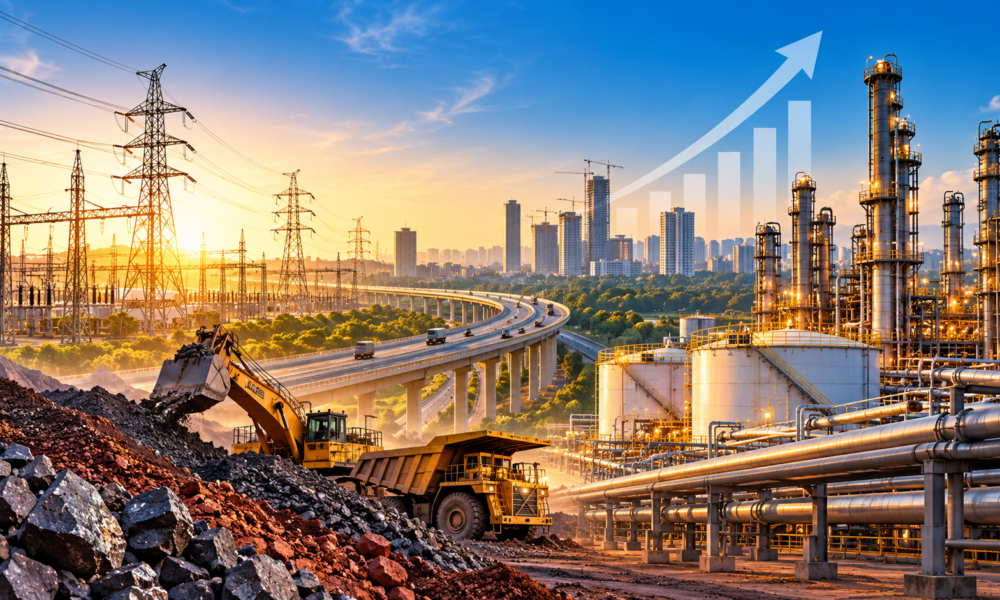
India’s infrastructure sector recorded strong growth in September 2026, with output across key industries increasing by 7.9% year-on-year. The latest figures indicate stronger activity in several sectors that support manufacturing, construction, energy and transportation.
According to Reuters, the growth was higher than the 5.9% recorded in August. The September figure was also the strongest increase since the current data series began in April 2024.
The figures offer an important snapshot of industrial activity. However, they do not mean that every infrastructure sector is expanding at the same pace.
Which Sectors Drove the Growth?
Several major industries recorded higher output in September.
Refinery products: Output increased by 10.3% year-on-year, reflecting stronger production in the petroleum refining sector.
Electricity generation: Power output rose by 11.4%. Reliable electricity is essential for factories, commercial buildings, transport systems and digital infrastructure.
Iron ore: Production increased by 18.4%, making it one of the strongest-performing sectors during the month. Iron ore supports the steel industry, which supplies materials for roads, railways, bridges and buildings.
Coal: Production grew by 10.7%, recovering after a decline in the previous period.
Cement and steel production also increased, although their growth rates were lower than in August. In contrast, crude oil, fertiliser and natural gas output declined.
These differences matter because infrastructure development depends on several connected industries. Growth in electricity or iron ore does not automatically mean that road construction, housing or every major project is progressing faster.
What Do the Numbers Mean for Infrastructure Development?
Infrastructure growth can influence the economy through several channels.
First, stronger steel, cement and mineral production can support construction activity when demand, project approvals and funding are in place.
Second, increased electricity generation can help meet the needs of industries and growing urban centres. However, generation figures alone do not reveal whether power is affordable, reliable or available where it is needed.
Third, stronger industrial output can support jobs and demand across supply chains, including transport, equipment, logistics and construction services.
The benefits depend on whether higher production translates into completed projects, productive capacity and improved services.
India’s Infrastructure Growth Over the First Six Months
Between April and September 2026, infrastructure output increased by 5.1% compared with the same period a year earlier. This was higher than the 2.5% growth recorded during the corresponding period in the previous year.
The six-month figure provides a broader view than a single month. Monthly production can rise or fall because of maintenance schedules, weather, demand changes and other temporary factors.
For policymakers and investors, the cumulative trend can help indicate whether industrial momentum is strengthening over time.
What Should Investors and Businesses Watch Next?
The next step is to examine whether the growth continues across different sectors.
Businesses should watch electricity demand, steel and cement production, fuel availability and the pace of major construction projects. Investors should also consider company-level performance, input costs, borrowing costs and project execution rather than relying on one headline figure.
Infrastructure output is a useful economic indicator, but it is not a direct measure of the profitability of individual companies or the completion rate of government projects.
Conclusion
India’s infrastructure output grew 7.9% in September 2026, supported by stronger production in electricity, refinery products, iron ore and coal. Growth over April to September also improved compared with the same period last year.
The key question is whether this momentum can continue and translate into stronger project execution, efficient logistics and lasting economic benefits.






No Comment! Be the first one.