







Gold Prices and Construction: Could Precious-Metal Costs Affect India’s Luxury Real Estate and Building Materials Market?
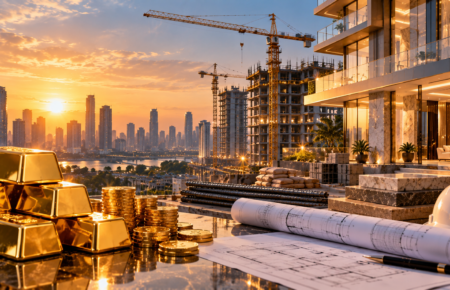
Gold prices are traditionally viewed as an investment and jewellery-market story. But in India’s luxury economy, changing gold prices and construction costs can intersect through wealth allocation,...

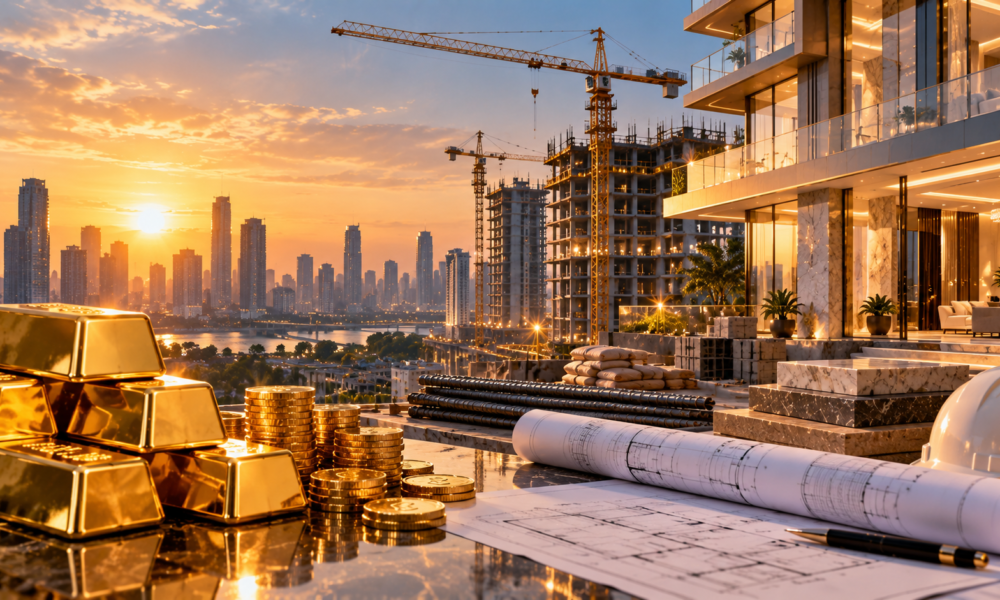
Gold prices are traditionally viewed as an investment and jewellery-market story. But in India’s luxury economy, changing gold prices and construction costs can intersect through wealth allocation, luxury consumption and real-estate investment.
On September 29, gold prices remained highly volatile. Reuters reported that spot gold had recovered around 1% after reaching a seven-week low, while investors continued to assess inflation and interest-rate expectations.
In Uttar Pradesh, indicative 24-carat gold was listed at around ₹1.46 lakh per 10 grams on September 29, according to ET Markets.
Gold itself is not a major structural construction input. Steel, cement, aggregates, glass, aluminium and petroleum-linked products are much more important to conventional building costs.
The connection with luxury real estate is therefore indirect.
Gold is deeply embedded in Indian household wealth and can influence how affluent consumers allocate capital. When precious-metal prices rise sharply, investors may reassess the balance between physical gold, financial assets and property.
Luxury residential real estate can benefit from broader wealth creation and investment diversification, although property decisions depend on many factors including interest rates, location, rental yields, supply and economic confidence.
There is also a design connection. Luxury real estate frequently incorporates premium finishes, decorative metals, specialised lighting, bespoke interiors and high-value fittings. Precious metals may appear in limited architectural and interior applications, although these are niche compared with the overall cost of a building.
For developers, the larger issue is the relationship between commodity prices and purchasing power.
Gold’s recent volatility has occurred alongside elevated oil prices and geopolitical uncertainty. Such conditions can affect inflation expectations, currencies and financing costs, all of which can influence real-estate markets.
The construction sector itself remains much more directly exposed to prices of steel, cement, fuel, glass and other building materials.
That means gold should not be treated as a direct indicator of construction costs. Instead, it can serve as one part of a broader picture of wealth, investment sentiment and luxury consumption.
For India’s luxury real-estate market, this distinction matters. Luxury housing is increasingly connected to the broader ecosystem of private wealth, premium consumption and alternative investments.
Gold prices may therefore provide an interesting economic signal for the luxury segment, but developers and buyers still need to watch the fundamentals of construction costs, financing, land values and demand.






No Comment! Be the first one.