








Saudi Arabia’s East-West Oil Pipeline: The Strategic Energy Infrastructure Behind Global Oil Flows
Saudi Arabia’s East-West Oil Pipeline has emerged as a critical piece of global energy infrastructure after operations were disrupted by a drone attack earlier this month. The pipeline connects Saudi...

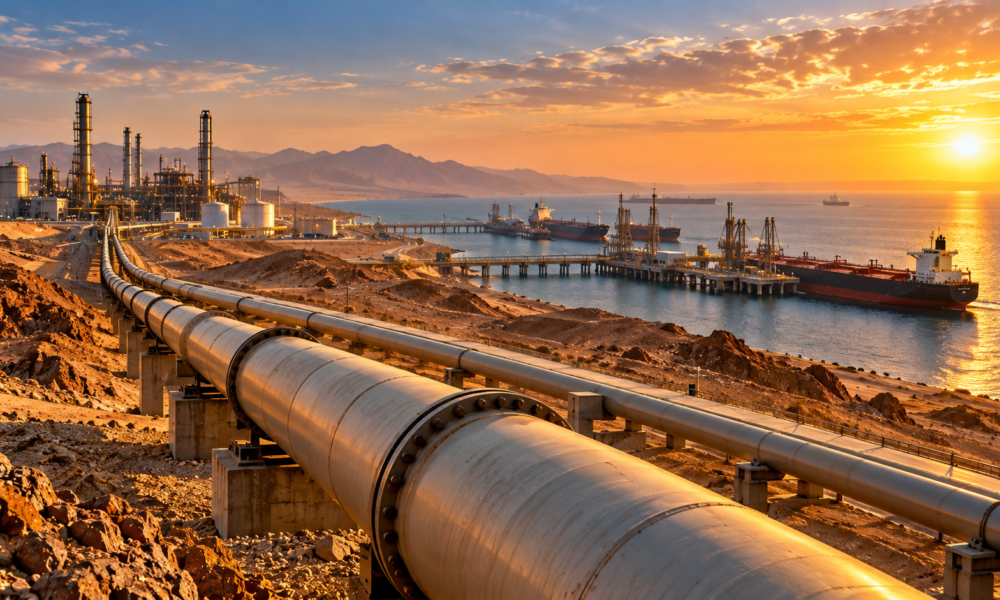
Saudi Arabia’s East-West Oil Pipeline has emerged as a critical piece of global energy infrastructure after operations were disrupted by a drone attack earlier this month.
The pipeline connects Saudi Arabia’s oil-producing eastern region with the Red Sea port of Yanbu, allowing crude to reach global markets without relying entirely on routes through the Strait of Hormuz.
The strategic importance of that alternative route was highlighted after the pipeline was temporarily shut following an attack on September 11. Operations resumed on September 22, with crude flows gradually increasing.
Reuters reported that the pipeline has a full capacity of around 7 million barrels per day. Following the disruption, throughput was initially estimated at around 2–2.65 million barrels per day, with expectations of further recovery.
The infrastructure is significant because oil transportation is not simply about production. Pipelines, storage terminals, ports and shipping routes together form an energy logistics network.
Yanbu provides Saudi Arabia with access to the Red Sea, creating a route that can help diversify export pathways. That makes the East-West Pipeline strategically important whenever shipping through the Gulf faces heightened risk.
The recent disruption also demonstrated the vulnerability of energy infrastructure. Damage to pumping stations can affect the movement of crude even when oil production itself remains operational.
Saudi Arabia responded by rebuilding pipeline operations while also increasing shipments through other export infrastructure. Reuters reported that Yanbu had resumed crude and refined-product loadings after the pipeline restart, while throughput continued to recover.
The episode highlights a broader infrastructure principle: redundancy matters.
For energy-producing countries, having multiple pipelines, ports, storage facilities and export corridors can reduce dependence on a single transportation route.
It also explains why energy infrastructure is increasingly viewed through a strategic-security lens. A pipeline can be thousands of kilometres away from a consumer market and still influence global prices if its capacity is large enough.
For India and other major oil-importing economies, disruptions to such infrastructure can affect crude availability, freight markets, currencies and inflation.
The East-West Pipeline therefore represents more than a Saudi domestic asset. It is part of the global infrastructure network connecting oil fields, pipelines, ports, tankers and refineries.
Its recent disruption has offered a reminder that the resilience of global energy supply depends not only on producing more oil, but also on protecting and diversifying the infrastructure that moves it.








No Comment! Be the first one.