








Illegal Construction in Indian Cities: Why Urban Planning and Enforcement Remain a Challenge
On 6 September 2026, a five-storey residential building operating as a boys’ PG (paying guest) accommodation collapsed in the Satya Niketan neighbourhood of South West Delhi. The collapse resulted in...

On 6 September 2026, a five-storey residential building operating as a boys’ PG (paying guest) accommodation collapsed in the Satya Niketan neighbourhood of South West Delhi. The collapse resulted in seven fatalities and six critical injuries, while some students were reportedly trapped under the rubble. The incident has highlighted concerns about Delhi University’s residential infrastructure and the lack of adequate university-provided accommodation.
The unregulated expansion of private PG networks has also contributed to supply shortages, while local landlords and property owners have reportedly formed syndicates that artificially inflate rental prices in nearby areas.
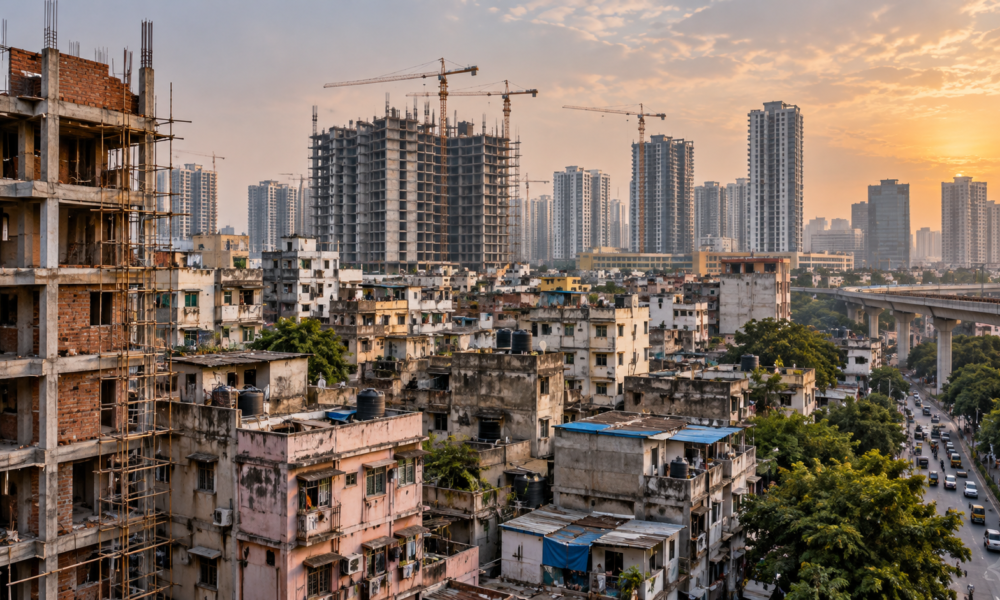
India’s cities are growing rapidly, increasing the need for housing, offices, schools, hospitals, roads and other infrastructure. However, many buildings are being constructed without proper planning or approvals. Illegal construction is particularly common in large cities, where land is expensive and demand for housing and commercial space is high.
Such construction can create serious problems for public safety, the environment, traffic and overall urban planning. Poorly constructed structures can lead to building collapses, fires and property damage, and can even cost lives, as highlighted by the Satya Niketan building collapse.
Illegal construction can also increase the risk of flooding by encroaching on water bodies, riverbanks, mangroves and other green spaces. These activities can block drainage systems and reduce cities’ ability to manage heavy rainfall and flooding.
A major challenge is the weak implementation of existing rules, even though India already has several laws and regulations governing construction. A report by the Observer Research Foundation (ORF) suggests using technologies such as remote sensing and artificial intelligence to identify illegal constructions more effectively and quickly.
The report also recommends faster online approval systems so that legal construction projects do not get delayed by lengthy government processes. Another important solution is to increase the supply of affordable and rental housing, particularly for low-income workers and migrants. The report also argues that India needs better urban planning and the development of more cities to reduce excessive pressure on major urban centres.
India needs more construction, but it must be legal, safe, properly planned and affordable for low-income groups.









No Comment! Be the first one.