








India’s Data Centre Boom: NITI Aayog’s New Framework and the Infrastructure Challenge
India’s growing digital economy is increasing demand for data centres, the facilities that store, process and distribute the information used by cloud services, digital payments, online...

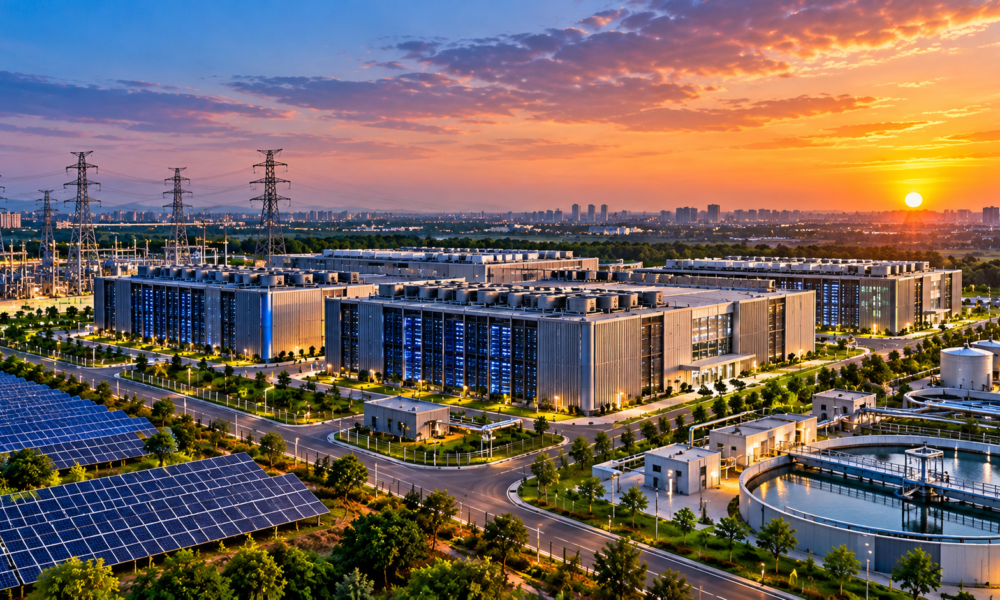
India’s growing digital economy is increasing demand for data centres, the facilities that store, process and distribute the information used by cloud services, digital payments, online platforms and artificial intelligence applications.
To help states plan for this expansion, NITI Aayog’s Frontier Tech Hub released a Data Centre Evaluation Framework on 14 October 2026. Announced by the government on 15 October, the framework aims to help states evaluate investment proposals, prepare supporting infrastructure and balance economic opportunities with resource constraints.
Why does India need more data centres?
Data centres provide the physical infrastructure behind many digital services. As businesses adopt cloud computing and AI tools, they need facilities capable of handling large volumes of data while maintaining reliable performance and security.
For India, additional capacity could support domestic technology businesses, enterprise digitisation, financial services and AI development. Data-centre investments can also create demand for construction, electrical equipment, cooling systems, fibre connectivity and specialised facility management.
However, attracting investment announcements is only one part of the challenge. A project must also secure suitable land, reliable electricity, cooling capacity and dependable connectivity before it can operate effectively.
Why is the NITI Aayog framework important?
The new framework provides states with a structured approach to evaluating data-centre investments. Rather than focusing only on the proposed investment value, policymakers need to assess whether a location can support the facility over its operating life.
Electricity is one of the most important considerations. Data centres require dependable power supplies, backup systems and efficient energy management. Grid capacity and the availability of cleaner electricity can influence project costs and long-term sustainability.
Water is another concern, particularly for facilities that use water-intensive cooling systems. Operators and state governments need to evaluate local water availability, cooling technology and opportunities to reduce consumption.
Land availability, fibre networks, disaster resilience and the ability to attract skilled workers also influence whether a location is suitable.
What could it mean for Indian states?
States that prepare infrastructure in advance may be better positioned to attract data-centre investment. This requires coordination between electricity providers, planning authorities, telecommunications companies, local governments and private developers.
The framework could help policymakers compare proposals more systematically and identify infrastructure gaps before projects are approved or developed.
For property developers and infrastructure companies, data centres create opportunities in industrial land, power infrastructure, transmission equipment, cooling systems and high-capacity telecommunications networks. Yet the benefits are not automatic. Large capital expenditure does not necessarily translate into equivalent local employment, and a facility’s operating needs can place substantial demands on utilities.
Can India balance growth with sustainability?
India’s data-centre opportunity will depend on how effectively the country coordinates digital expansion with physical infrastructure. Renewable power procurement, energy-efficient equipment, advanced cooling and responsible water management can help reduce environmental pressures.
States will also need to distinguish between proposed investments, projects under construction and operational capacity. These categories represent different stages of development and should not be treated as equivalent.
The NITI Aayog framework offers a planning tool, but its impact will depend on how individual states apply it. The real test will be whether India can attract investment while ensuring that power, water, land and connectivity are available at the right time and cost.
Editorial note: The framework is a planning instrument. Do not imply that its release automatically approves projects or guarantees investment in any particular state.








No Comment! Be the first one.