








India’s Non-Fossil Power Capacity Set to Cross 300 GW, Marking a New Phase of Infrastructure Growth
India is on course to cross 300 gigawatts of non-fossil fuel-based power capacity by September this year, a milestone that underlines the country’s rapid transformation into one of the...

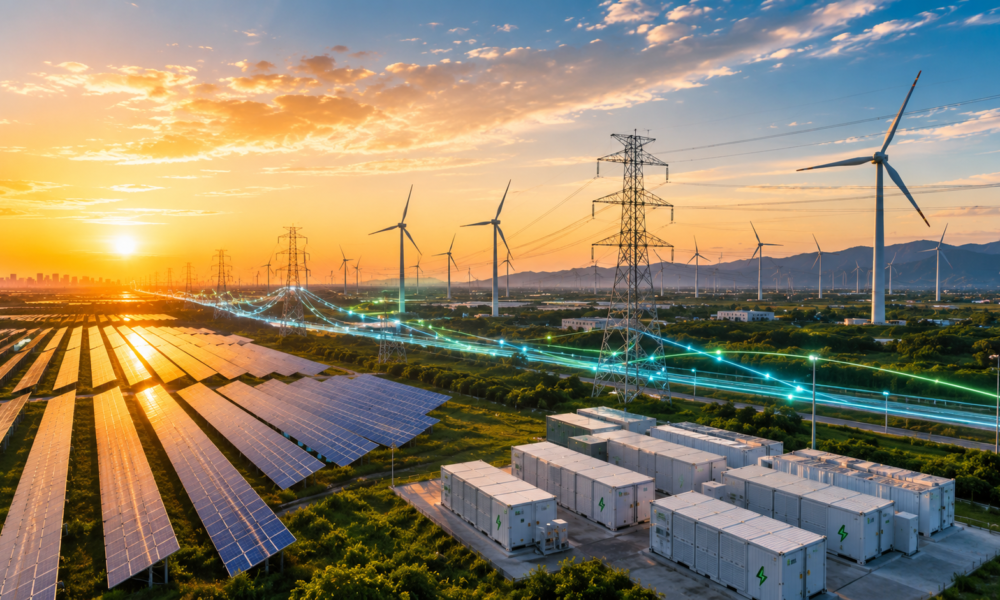
India is on course to cross 300 gigawatts of non-fossil fuel-based power capacity by September this year, a milestone that underlines the country’s rapid transformation into one of the world’s largest clean energy markets.
Union Minister for New and Renewable Energy Pralhad Joshi recently said that India’s installed non-fossil power capacity currently stands at about 291.5 GW and is expected to cross the 300 GW mark within the next few months. The development places India firmly on the path towards achieving its target of 500 GW of non-fossil fuel capacity by 2030.
The numbers reflect more than an expansion of power generation. They indicate the emergence of a new infrastructure cycle driven by renewable energy, transmission networks, energy storage systems and manufacturing ecosystems that support clean technologies.
Over the past decade, India has invested heavily in solar parks, wind corridors and transmission infrastructure. Renewable energy now accounts for more than half of the country’s installed electricity capacity, achieved ahead of earlier projections. Solar and wind energy projects have spread beyond traditional industrial centres and are increasingly creating new economic opportunities in states such as Rajasthan, Gujarat and Tamil Nadu.
The transition has also triggered significant investment opportunities. Industry estimates indicate that infrastructure investments worth several lakh crore rupees will be required over the coming years to build generation assets, strengthen transmission systems and expand battery storage facilities. The government’s infrastructure strategy increasingly places clean energy alongside highways, railways and digital infrastructure as a key pillar of economic growth.
The expansion of renewable capacity has wider implications for India’s manufacturing and industrial ambitions. Large-scale clean power availability is becoming an important factor for attracting investments in data centres, electronics manufacturing, electric vehicles and green hydrogen projects. International investors and technology companies are increasingly evaluating states based on their renewable energy ecosystems and access to reliable clean power.
Energy demand in India continues to rise alongside urbanisation and industrial growth. The country recently crossed an overall power generation capacity of 530 GW and is expected to approach 600 GW next year. Meeting this demand while reducing dependence on fossil fuels will require unprecedented investments in infrastructure and planning.
For infrastructure developers, the opportunity extends beyond renewable generation projects. Transmission lines, grid modernisation, battery storage systems and smart energy management solutions are expected to emerge as major areas of investment. Industry experts have repeatedly stressed that power infrastructure must expand in parallel with renewable capacity to avoid supply bottlenecks and maintain grid reliability.
The coming years are therefore likely to witness a broad-based infrastructure buildout that combines energy security with sustainability objectives. Crossing the 300 GW threshold will not merely represent another capacity milestone. It will mark India’s arrival at a stage where clean energy infrastructure is becoming central to industrial competitiveness, investment attraction and long-term economic growth.









No Comment! Be the first one.