







Jewar Is Emerging as an Electronics Manufacturing Hub: How Noida Could Benefit from India’s Semiconductor Push
Jewar in Uttar Pradesh is gaining attention as an emerging destination for electronics and semiconductor manufacturing. With new industrial projects, government support and the development of Noida...

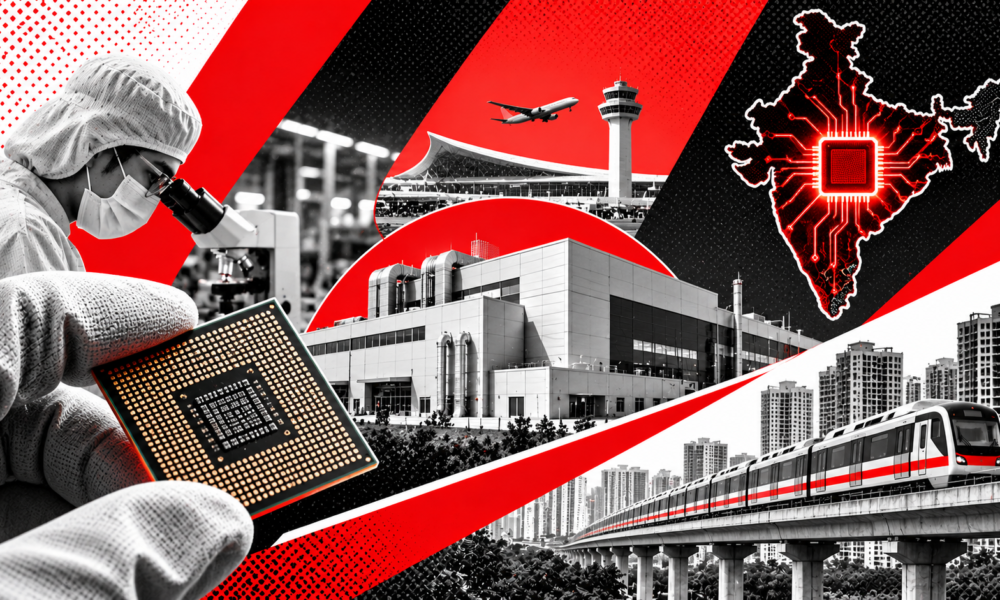
Jewar in Uttar Pradesh is gaining attention as an emerging destination for electronics and semiconductor manufacturing. With new industrial projects, government support and the development of Noida International Airport, the region is attracting interest from companies looking to expand their manufacturing operations in India.
The development could also create opportunities for industrial real estate, logistics, construction and employment across the wider Noida and Greater Noida region.
Jewar’s Electronics Manufacturing Push
In June 2026, the Uttar Pradesh government and the Union Ministry of Electronics and Information Technology laid the foundation stones for two electronics manufacturing projects worth approximately ₹6,750 crore at Yamuna City, Jewar.
According to the Ministry of Electronics and Information Technology, an electronics manufacturing cluster is being developed across 206 acres. The projects are expected to strengthen domestic production of advanced printed circuit boards and other electronic components.
Printed circuit boards, commonly called PCBs, are important components used in smartphones, computers, automobiles, medical equipment and industrial machines.
India currently imports significant quantities of electronic components. Developing domestic manufacturing capacity could help strengthen local supply chains and reduce dependence on overseas suppliers. <Cite refs={[“turn340543search7”]}/>
India’s Semiconductor Industry Is Expanding
Jewar’s development is part of a larger national effort to build India’s semiconductor industry.
On November 6, 2026, the government launched the Semicon 2.0 application portal and announced 12 additional approved applicants under the Electronics Components Manufacturing Scheme.
The latest approvals involve projected investments of ₹7,503 crore and are expected to generate 7,127 direct jobs.
Across the wider Electronics Components Manufacturing Scheme, 118 applications covering 34 products have been approved, with expected investments of ₹77,051 crore. <Cite refs={[“turn340543search0”]}/>
The Semicon 2.0 programme also focuses on chip design, manufacturing equipment, semiconductor fabrication, advanced packaging, research and workforce development.
These initiatives are intended to create a more complete domestic electronics manufacturing ecosystem.
Why Noida and Jewar Are Important
The Noida and Greater Noida region already has an established electronics manufacturing base.
The presence of manufacturing companies, suppliers, technology businesses and industrial infrastructure gives the region an advantage when attracting new investments.
The upcoming Noida International Airport could further improve regional connectivity and support the movement of goods and business travel.
Industrial development around the Yamuna Expressway could also increase demand for warehouses, logistics facilities, factory spaces and supporting commercial infrastructure.
However, the benefits will depend on how quickly supporting facilities and transport connections develop.
Opportunities for Real Estate and Employment
The expansion of electronics manufacturing could influence more than factory construction.
Large industrial projects require warehouses, offices, worker accommodation, utilities, roads and other supporting facilities.
This could create opportunities for industrial real estate developers and construction companies.
The growth of manufacturing clusters may also increase demand for skilled engineers, technicians, logistics professionals and other workers.
Local businesses providing transport, maintenance, food services and industrial supplies could benefit as new facilities become operational.
Challenges That Need Attention
Building an electronics manufacturing hub requires more than attracting companies.
Manufacturers need reliable electricity, uninterrupted water supply, efficient waste management and strong transport connections.
Semiconductor-related facilities also require specialised infrastructure, skilled workers and strict environmental controls.
The region will need careful urban planning to ensure that industrial growth does not create additional pressure on roads, housing and public utilities.
What Lies Ahead for Jewar?
Jewar’s manufacturing ambitions could support a wider industrial transformation in Uttar Pradesh.
The combination of electronics manufacturing, airport connectivity, logistics infrastructure and industrial development creates an opportunity for the region to become an important manufacturing destination.
However, announced investments and foundation-stone ceremonies should not be confused with completed factories or operational production.
The long-term success of the region will depend on project execution, supplier development, infrastructure readiness and the ability to attract sustained private investment.
Jewar’s future may be shaped not only by its airport, but also by the industries and businesses that develop around it.









No Comment! Be the first one.