








Noida International Airport opens, signalling a calibrated push for regional connectivity
The inauguration of the Noida International Airport at Jewar by Narendra Modi marks a significant addition to India’s expanding aviation and logistics network, with implications that extend beyond...

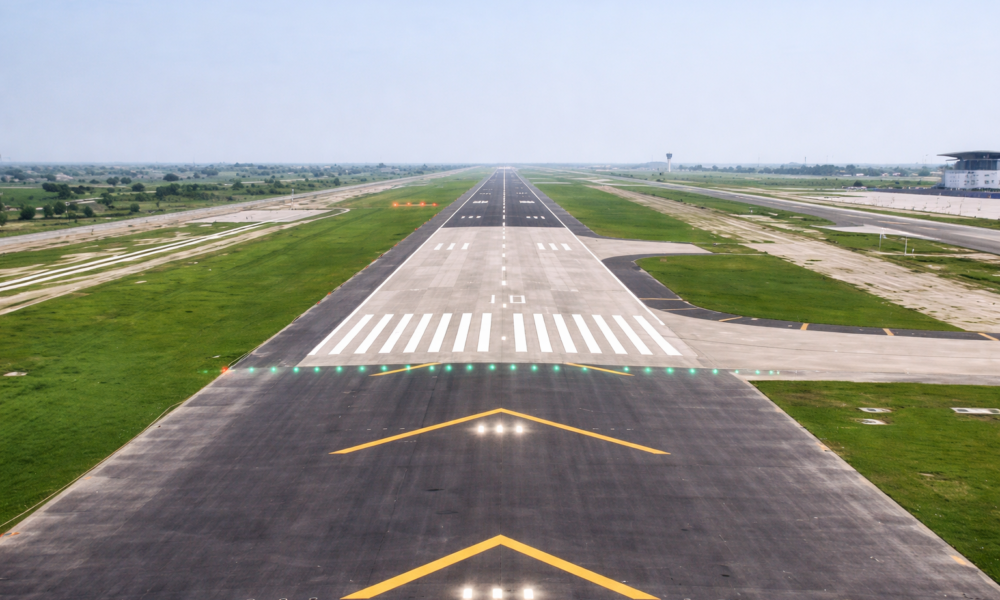
The inauguration of the Noida International Airport at Jewar by Narendra Modi marks a significant addition to India’s expanding aviation and logistics network, with implications that extend beyond passenger traffic. Positioned as a second major gateway for the National Capital Region, the project reflects a policy shift that places infrastructure at the centre of economic expansion and regional balance.
In its first phase, the airport is expected to ease pressure on Delhi’s existing capacity while offering a new axis of connectivity for western Uttar Pradesh and adjoining industrial clusters. Its design integrates passenger movement with cargo handling, underlining the government’s emphasis on building multimodal hubs that can support trade as much as travel.
The timing is notable. As global economic conditions remain uneven, public investment in large infrastructure projects continues to serve as a stabilising lever for domestic growth. The Jewar airport, with its scale and planned linkages to expressways and freight corridors, fits into a broader template where connectivity is expected to unlock new economic zones rather than merely serve existing demand.
Yet, execution will remain the real test. Ensuring seamless last mile connectivity, maintaining timelines for subsequent phases, and aligning urban planning around the airport will determine whether the project evolves into a genuine growth engine or risks becoming another underutilised asset.
For now, the opening of the Noida International Airport signals intent. It reflects a state that is willing to spend, build, and integrate infrastructure in pursuit of long term economic gains, even as the challenge shifts from announcement to delivery.







No Comment! Be the first one.