






Karnataka Seeks Special Package for Bengaluru as City Grapples With Growth Pressures
Karnataka has sought greater support from the Centre for Bengaluru’s infrastructure, arguing that the country’s technology capital requires urgent investments in urban mobility, water...

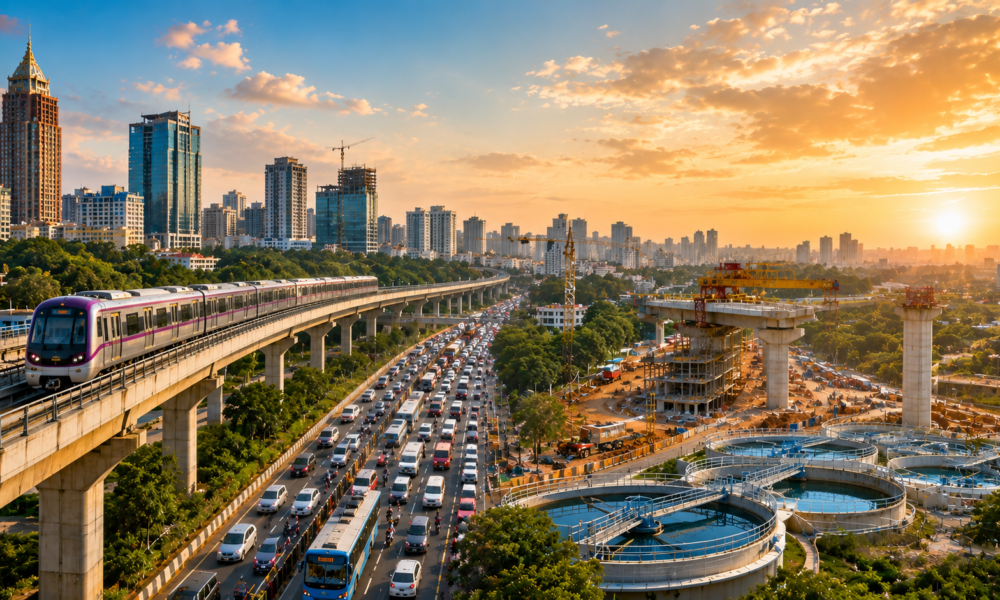
Karnataka has sought greater support from the Centre for Bengaluru’s infrastructure, arguing that the country’s technology capital requires urgent investments in urban mobility, water security and regional connectivity to sustain its economic importance.
Chief Minister D.K. Shivakumar has requested a special infrastructure package of about ₹26,000 crore for Bengaluru and sought approval for a series of transport and urban development projects. The proposals include support for metro rail expansion, the Satellite Town Ring Road project, suburban rail connectivity and measures aimed at strengthening the city’s long-term water security.
Bengaluru occupies a unique place in India’s economic landscape. The city contributes significantly to the country’s technology exports and hosts thousands of global capability centres, research facilities and start-ups. However, its rapid growth has put enormous pressure on roads, public transport systems and civic infrastructure.
Traffic congestion remains among the city’s biggest challenges. As office districts expand and the urban population continues to grow, transport networks are struggling to keep pace with rising demand. The state government argues that major infrastructure interventions are necessary not merely for local convenience but for maintaining Bengaluru’s competitiveness as a global technology destination.
Water security has emerged as another critical concern. Successive years of rapid urbanisation have increased dependence on river systems and groundwater resources. The government has highlighted the need for long-term investments in water supply projects and infrastructure that can support future population growth. Bengaluru has increasingly faced periods of water stress, bringing questions of urban resilience and sustainable resource management to the forefront of policy discussions.
The state’s proposals also include support under the Centre’s Urban Challenge Fund for a set of development projects with a combined value exceeding ₹13,500 crore. The funding is expected to be directed towards improving mobility infrastructure and strengthening urban services across the metropolitan region.
Urban planners have long argued that Bengaluru’s challenges are a consequence of growth outpacing infrastructure creation. The city has transformed from a regional administrative centre into one of the world’s leading technology hubs in less than three decades. This expansion has generated employment and investment but has also exposed limitations in planning and infrastructure delivery.
For Karnataka, the request for greater central assistance is therefore not only about securing funds for specific projects. It is an attempt to address structural pressures that could eventually affect economic productivity and investor confidence. The state believes that infrastructure investments in Bengaluru will have national economic implications given the city’s role in technology exports, innovation and employment generation.
As India’s urban economy expands, Bengaluru’s experience illustrates a broader challenge facing rapidly growing cities. Economic success increasingly depends on the ability of infrastructure systems to support population growth, mobility and resource security. The decisions taken over the next few years are likely to shape not only Bengaluru’s future but also the trajectory of India’s largest urban growth centres.






No Comment! Be the first one.