








Centre drops early completion bonus for highway projects in hill states to prioritise quality and safety
The Central government has revised its approach to highway construction in India’s mountainous regions by removing the incentive for contractors to complete projects ahead of schedule. The move...

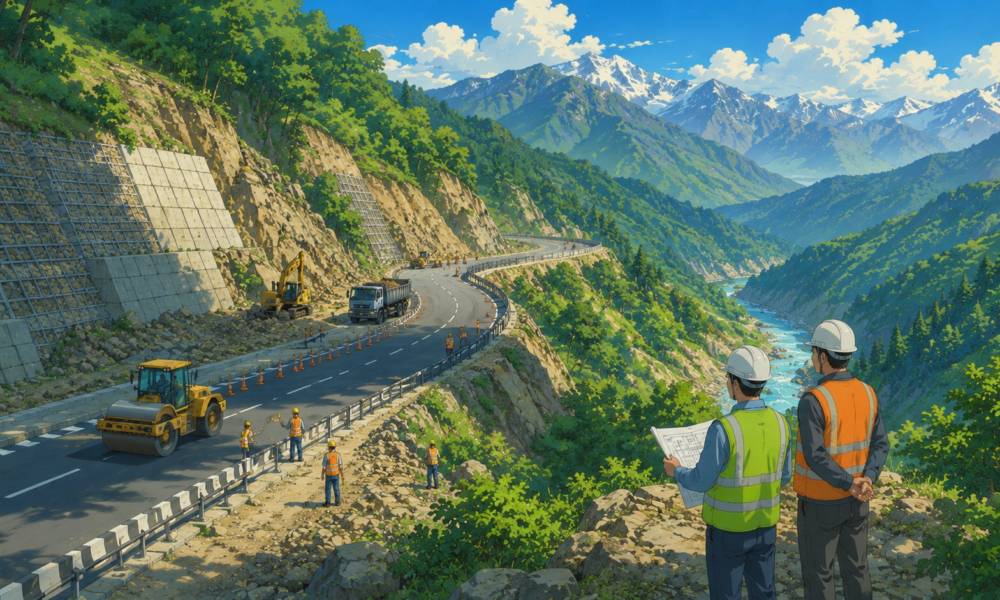
The Central government has revised its approach to highway construction in India’s mountainous regions by removing the incentive for contractors to complete projects ahead of schedule. The move is aimed at improving the quality, durability and safety of national highways in hill states, where challenging terrain and extreme weather often affect construction and long-term road performance.
The Ministry of Road Transport and Highways (MoRTH) has issued updated guidelines that shift the focus from faster project delivery to scientific planning and engineering. Under the revised policy, contractors working on national highway projects in hill states will no longer receive bonus payments for completing construction before the scheduled deadline. Instead, the emphasis will be on ensuring that roads are built to withstand the unique geological and climatic conditions of mountainous regions.
One of the most significant changes introduced under the new guidelines is the requirement for freshly cut hill slopes to undergo at least one monsoon season before permanent road works are taken up. This observation period will allow engineers to assess how slopes respond to heavy rainfall and identify potential risks such as landslides, soil erosion and ground movement. Any instability detected during the monsoon can be addressed before the road structure is completed, helping to improve the lifespan of the highway and reduce future maintenance requirements.
The ministry has also strengthened the norms for geological investigations during the planning stage. Project developers will now be required to carry out more detailed studies of soil conditions, rock formations, groundwater flow and slope characteristics before construction begins. These investigations are expected to help engineers design road alignments and support structures that are better suited to local terrain, reducing the likelihood of structural failures after completion.
In addition, the revised guidelines call for continuous monitoring of vulnerable hill slopes throughout the construction phase. Contractors will be expected to implement suitable slope stabilisation measures wherever necessary. These may include retaining walls, rock bolting, proper drainage systems, reinforced earth structures and bioengineering techniques that help control erosion while improving slope stability. According to the government, these measures will contribute to safer highways and lower maintenance costs over the long term.
The policy comes against the backdrop of increasing landslides and road damage in several hill states, particularly during the monsoon. States such as Himachal Pradesh, Uttarakhand, Jammu and Kashmir and several parts of the North East have experienced repeated highway disruptions due to unstable slopes, flash floods and heavy rainfall. While road connectivity remains essential for economic development, tourism and defence logistics, the difficult geography has often led to project delays, rising construction costs and recurring repair work.
By removing incentives linked to early completion, the government intends to discourage rushed construction practices that may compromise engineering standards. Contractors bidding for future highway projects in hill regions will now need to account for longer site observation periods, comprehensive geological surveys and enhanced monitoring requirements while preparing project schedules and cost estimates.
Although the revised approach could extend construction timelines in certain cases, it is expected to improve the overall resilience of highway infrastructure. Roads designed using better geological data and scientific construction methods are likely to require fewer repairs, remain operational for longer periods and offer safer travel conditions for commuters.
The updated policy also reflects a broader shift in India’s infrastructure strategy, where long-term asset performance is being given greater importance alongside project execution. As the country continues to expand its national highway network, particularly in environmentally sensitive and strategically important regions, the emphasis is increasingly on building infrastructure that can withstand changing climate conditions while delivering reliable connectivity for decades to come.










No Comment! Be the first one.