







India Plans Dedicated Power Grid for Data Centres as AI Boom Accelerates Infrastructure Demand
India’s rapidly expanding data centre industry is set to receive a major infrastructure boost as the Ministry of Power works on a dedicated strategy to ensure uninterrupted electricity supply...

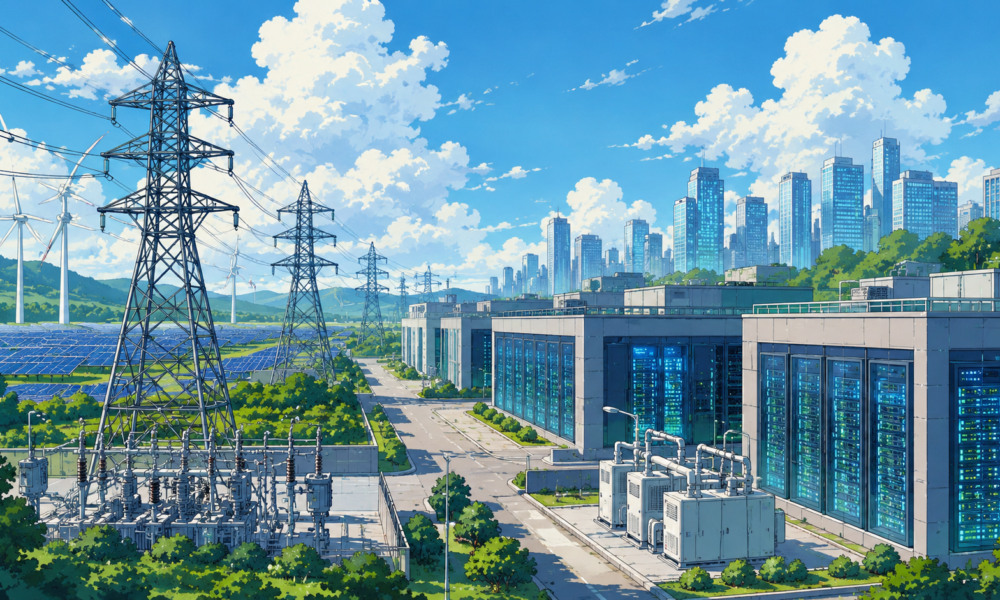
India’s rapidly expanding data centre industry is set to receive a major infrastructure boost as the Ministry of Power works on a dedicated strategy to ensure uninterrupted electricity supply for one of the country’s fastest-growing sectors. With artificial intelligence, cloud computing and digital services driving unprecedented demand, policymakers are now focusing on strengthening the power backbone that will support India’s next phase of digital infrastructure.
According to government estimates, electricity demand from data centres is expected to reach around 26 GW by 2032 before rising further to nearly 35.7 GW by 2040. These projections have prompted discussions between the Ministry of Power, power utilities, transmission agencies and industry stakeholders on creating a long-term framework capable of supporting this rapid expansion.
Unlike conventional commercial buildings, modern data centres require continuous and highly reliable electricity. Even brief power disruptions can affect cloud services, financial transactions, digital communication platforms and AI workloads. As India positions itself as a global digital economy, ensuring stable power availability has become just as important as developing roads, airports and industrial corridors.
Industry experts believe that a dedicated power strategy could include new transmission infrastructure, stronger grid connectivity, additional substations and improved integration of renewable energy sources. Several operators are also investing in battery storage systems and backup technologies to enhance resilience while reducing dependence on diesel generators.
The development comes at a time when India’s data centre capacity continues to grow across major cities including Mumbai, Chennai, Hyderabad, Bengaluru, Delhi NCR and Pune. These locations have emerged as preferred destinations due to their digital connectivity, fibre infrastructure, business ecosystems and access to enterprise customers. Growing demand from hyperscale cloud providers, financial institutions, telecom operators and AI companies is further accelerating investment in new facilities.
The government’s focus reflects a broader shift in how digital infrastructure is viewed. Data centres are increasingly being treated as critical national infrastructure because they support everything from digital payments and e-commerce to healthcare, education, governance and artificial intelligence. Reliable electricity is therefore becoming a strategic requirement rather than simply an operational necessity.
India has already attracted significant commitments from global technology companies and domestic infrastructure developers looking to expand their digital footprint. As AI adoption grows, computing requirements are expected to increase sharply, placing additional pressure on power networks. Industry observers note that proactive planning today could prevent supply constraints in the coming decade while strengthening India’s competitiveness as a global data centre destination.
The proposed power infrastructure initiative also aligns with India’s broader ambitions of expanding renewable energy and improving grid efficiency. Future data centre campuses are likely to rely on a mix of conventional power, renewable energy procurement and advanced energy management systems to meet sustainability goals while ensuring round-the-clock operations.
For the infrastructure sector, this represents more than an energy planning exercise. It highlights the growing convergence of digital infrastructure and physical infrastructure, where electricity networks, transmission systems and clean energy will play a defining role in supporting India’s AI-driven economic transformation. As investments continue to flow into the sector, power readiness could become one of the most important factors influencing the location and scale of future data centre developments.







No Comment! Be the first one.