








India Plans Dedicated Power Grid for Data Centres as Digital Infrastructure Demand Accelerates
India is preparing for the next phase of its digital infrastructure expansion with the Ministry of Power working on a dedicated roadmap to strengthen electricity and transmission networks for data...

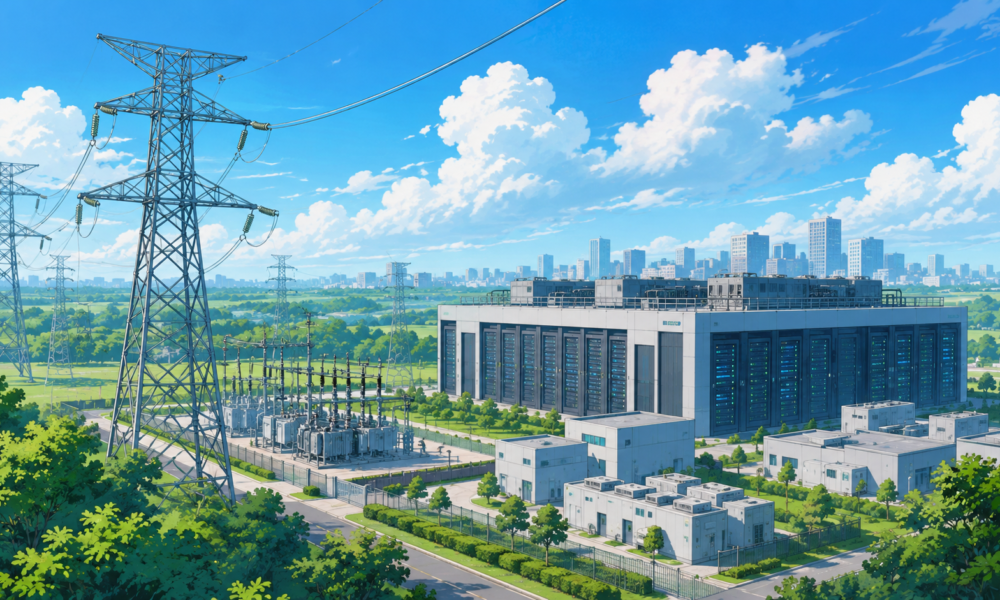
India is preparing for the next phase of its digital infrastructure expansion with the Ministry of Power working on a dedicated roadmap to strengthen electricity and transmission networks for data centres. As artificial intelligence, cloud computing and digital services continue to grow, the government is stepping up efforts to ensure that power infrastructure keeps pace with rising demand.
Officials are holding discussions with data centre developers, state transmission utilities and electricity distribution companies to assess future power requirements and identify the infrastructure needed to support upcoming projects. The exercise is expected to help states plan transmission lines, substations and reliable electricity supply well before new facilities become operational.
According to internal projections by the Ministry of Power, electricity demand from data centres could rise to 26 GW by 2032 before increasing further to 35.7 GW by 2040. The sharp rise reflects the growing adoption of AI applications, hyperscale cloud infrastructure and digital services across sectors ranging from finance and healthcare to manufacturing and e-commerce.
Unlike conventional commercial buildings, data centres require uninterrupted electricity around the clock. Even short power interruptions can disrupt digital services, making reliable transmission infrastructure as important as the facilities themselves. Industry experts say future planning will focus on dual-grid connectivity, transmission capacity, green power integration and grid stability to meet these demanding operational requirements.
India’s data centre industry has expanded rapidly over the past few years. Operational capacity has increased from around 375 MW in 2020 to approximately 1.6 GW today, while projects under construction and in early development exceed 8 GW. This pipeline highlights the scale of infrastructure investment required not only in buildings and digital equipment but also in electricity transmission networks.
The expansion is being driven by strong demand from global technology companies, enterprise cloud providers and AI developers. Major firms including Reliance Industries, Adani Group, Amazon Web Services, Microsoft, Google, Meta, NTT Data, Sify, Nxtra by Airtel and HCL Technologies have announced significant investments in new data centre capacity across India.
Government support is also extending to state-level infrastructure planning. Authorities are encouraging states to assess future electricity requirements for proposed data centres so that transmission infrastructure can be developed in advance. This coordinated approach is expected to reduce project delays and improve long-term energy security for digital infrastructure investments.
The focus on power infrastructure comes as India’s digital economy continues to expand. Industry estimates suggest the country’s data centre value chain could create an opportunity worth around $90 billion by FY2035, supported by rising internet usage, AI adoption, data localisation requirements and enterprise digital transformation.
For the infrastructure sector, the government’s planning signals a broader shift in how electricity networks are being designed. Future transmission systems will increasingly support not only cities and industries but also large-scale digital infrastructure that forms the backbone of India’s technology ecosystem. As investment flows into hyperscale facilities continue to rise, reliable power connectivity is expected to become one of the defining factors shaping the country’s next generation of infrastructure development.








No Comment! Be the first one.