





Mumbai’s Emerging Infrastructure Corridors Could Become the Next Business Growth Hubs
Mumbai’s next commercial success story may not emerge from an established business district, but from the city’s rapidly developing infrastructure corridors. Urban planners and real...

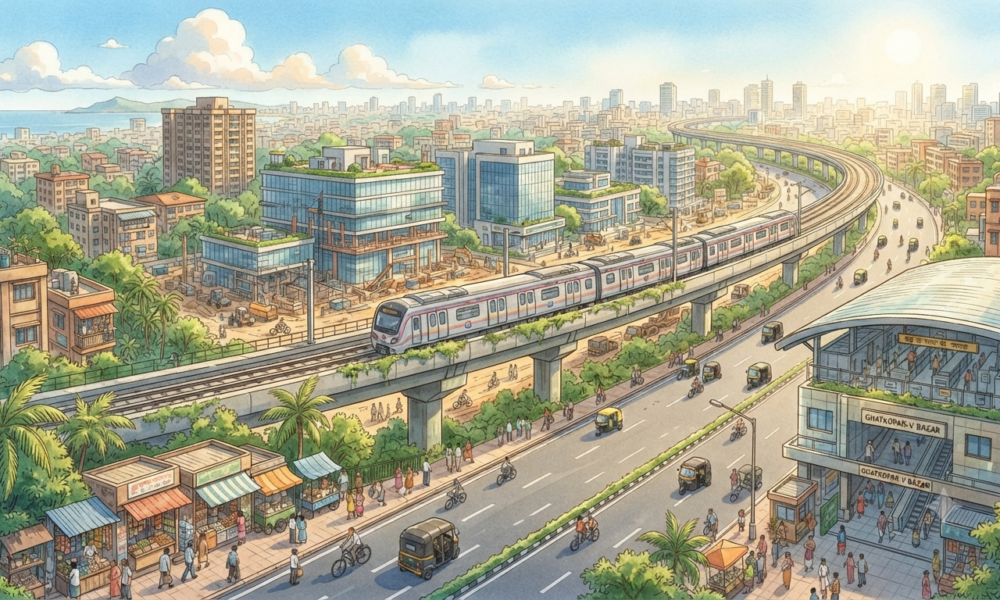
Mumbai’s next commercial success story may not emerge from an established business district, but from the city’s rapidly developing infrastructure corridors. Urban planners and real estate experts believe that several emerging locations across the Mumbai Metropolitan Region are following a development path similar to Bandra Kurla Complex (BKC), which evolved from marshland into one of India’s most valuable commercial centres through decades of coordinated infrastructure planning.
The transformation of BKC did not happen overnight. It was driven by a combination of road networks, railway connectivity, planned zoning, transport integration and long-term government policy. Today, a similar approach is being adopted across several parts of the Mumbai Metropolitan Region, where transport infrastructure is being developed before large-scale commercial activity begins. Experts believe this strategy could unlock the next generation of business districts.
Infrastructure has increasingly become the foundation for urban development across India. New metro lines, highways, rail corridors and multimodal transport systems are changing how businesses choose office locations and how people decide where to live. Areas that were once considered peripheral are becoming attractive destinations because improved connectivity reduces travel time and enhances access to employment, services and commercial opportunities.
For developers, early infrastructure investment often signals future growth. Commercial office projects, residential developments, retail centres and mixed-use communities typically follow once reliable transport links are established. Businesses also benefit from lower operational costs while gaining access to a wider talent pool as commuting becomes easier.
The Mumbai Metropolitan Region is witnessing this transition across multiple emerging corridors. While these locations have not yet reached the commercial maturity of BKC, their improving connectivity is creating strong long-term investment potential. Property values often respond gradually to infrastructure improvements, giving investors and businesses an opportunity to enter these markets before they become fully established.
The wider economic impact extends well beyond real estate. Infrastructure development generates employment during construction and supports long-term growth by attracting offices, retail businesses, hospitality, logistics and public services. Improved transport networks also encourage balanced urban expansion by reducing pressure on existing commercial centres while distributing economic activity across new locations.
For everyday commuters, the benefits are equally significant. Better transport options reduce travel times, improve access to jobs and create more convenient links between residential neighbourhoods and commercial districts. Businesses can operate more efficiently, employees spend less time commuting and surrounding communities benefit from improved public infrastructure.
India’s infrastructure strategy is increasingly focused on building connected urban ecosystems rather than isolated projects. Roads, metro systems, railways and commercial development are now being planned together to maximise economic returns and improve quality of life. This integrated approach reflects a shift towards long-term urban planning rather than reactive expansion.
As Mumbai continues to grow, its future business districts may emerge from today’s infrastructure corridors rather than existing commercial hubs. The success of BKC demonstrated what coordinated planning can achieve. The next chapter of Mumbai’s growth could be written in these new, well-connected locations that are steadily attracting investment, businesses and people. For developers, investors and city planners, the message is becoming increasingly clear: infrastructure is no longer simply supporting urban growth. It is defining where that growth happens.






No Comment! Be the first one.