





India BRICS Summit 2026: How Global Cooperation Could Shape Infrastructure, Real Estate and Investment
India is set to host the 18th BRICS Summit in 2026, creating an opportunity for New Delhi to strengthen its position in the Global South while attracting infrastructure funding, expanding trade and...

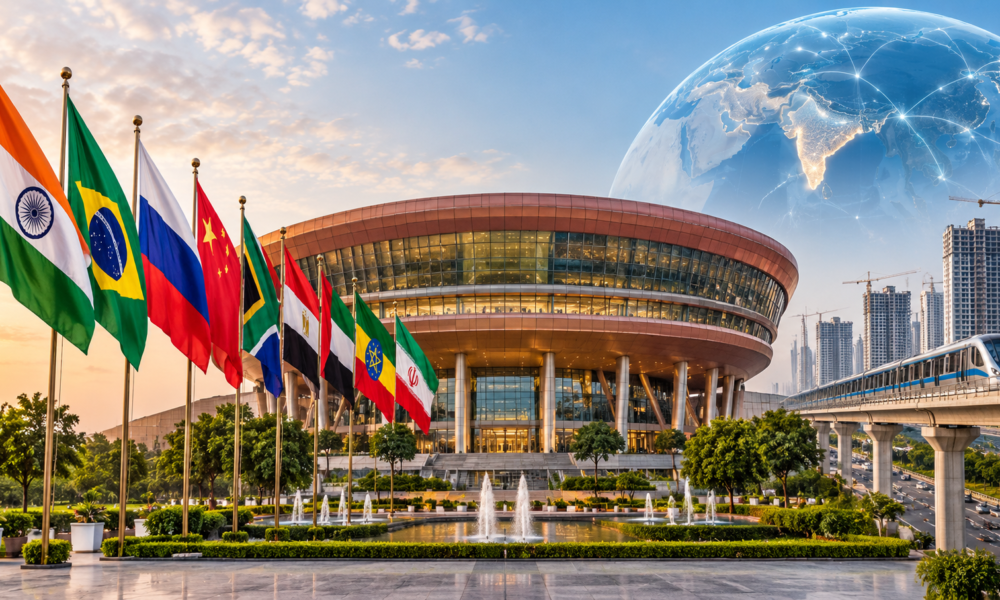
India is set to host the 18th BRICS Summit in 2026, creating an opportunity for New Delhi to strengthen its position in the Global South while attracting infrastructure funding, expanding trade and building new avenues for cross-border investment.
India is preparing to host the 18th BRICS Summit on September 12 and 13, 2026. For the infrastructure and real estate sectors, the summit could provide an important platform for discussions around development finance, urban infrastructure, connectivity, technology and sustainable growth.
As India takes a leading role within the expanded BRICS grouping, New Delhi has an opportunity to push the organisation beyond consultation and towards more practical, project-oriented cooperation. Areas such as infrastructure financing, Digital Public Infrastructure (DPI), strategic minerals, energy security and alternative financial mechanisms could become important elements of this agenda.
Strategic Autonomy and Infrastructure Opportunities
BRICS gives India a platform to engage with major emerging economies while maintaining its strategic autonomy. New Delhi can participate in BRICS and the Shanghai Cooperation Organization (SCO), maintain its relationship with Russia and simultaneously deepen engagement with the Quad, G20, European Union and the United States.
For India’s infrastructure and real estate ecosystem, this diversified diplomatic approach can create opportunities for partnerships, investment and technology collaboration across multiple markets. Greater engagement with BRICS economies could also support infrastructure companies seeking access to overseas projects and capital.
Reforming Global Institutions and Development Finance
India has consistently advocated greater representation for developing economies in institutions such as the UN Security Council, IMF, World Bank and WTO. The 2025 Rio de Janeiro Declaration also highlighted the need for comprehensive reforms in international institutions.
For infrastructure development, greater representation of emerging economies could have implications for how development finance is structured and distributed. India can use the BRICS platform to advocate financing mechanisms that address the infrastructure requirements of developing countries.
India’s Leadership of the Global South
BRICS strengthens India’s ability to position itself as an influential voice for the Global South. Through initiatives such as the Voice of Global South Summit and its engagement with the G20 and BRICS, India has highlighted issues including climate finance, food security, healthcare, technology access and infrastructure development.
For emerging markets, these discussions are particularly relevant as cities and economies require substantial investment in transportation, housing, energy and digital infrastructure.
NDB Funding and India’s Infrastructure Push
The New Development Bank (NDB) has emerged as an additional source of financing for infrastructure and sustainable development projects.
As of December 2024, India was the largest borrower from the NDB, accounting for approximately 26% of the bank’s total portfolio. By April 2025, India’s borrowing had increased to approximately $10 billion.
NDB financing has supported major infrastructure projects in India, including the Chennai, Indore and Mumbai Metro systems, the Delhi-Ghaziabad-Meerut Regional Rapid Transit System (RRTS), and Namo Bharat trains.
The scale of this financing highlights the potential importance of BRICS-linked institutions for India’s long-term urban infrastructure expansion.
Trade Expansion Could Support Industrial and Real Estate Growth
The expanded BRICS grouping connects India with markets across Eurasia, Latin America, Africa, West Asia and Southeast Asia. The inclusion of countries such as the UAE, Egypt, Ethiopia, Iran and Indonesia could create additional opportunities for Indian companies.
Sectors including pharmaceuticals, automobiles, engineering goods, textiles, digital services and renewable-energy equipment could benefit from expanded market access.
For India’s real estate and infrastructure sectors, greater trade flows can also support demand for industrial parks, logistics facilities, warehouses, commercial spaces and data-driven infrastructure around emerging economic corridors.
India’s total exports reached a record $825 billion in FY2024-25, according to the figures cited in the source material. Greater BRICS engagement could help diversify India’s export markets beyond traditional Western destinations.
Energy and Mineral Security
The expanded BRICS grouping brings together countries with significant reserves and production of oil, natural gas, coal and strategic minerals.
Russia, Saudi Arabia, the UAE and Iran are major energy producers, while Brazil and South Africa have substantial mineral resources. Indonesia is also a major producer of nickel and coal.
For India, stronger cooperation could support long-term energy supply agreements, mineral partnerships and investments in emerging sectors such as green hydrogen and nuclear energy.
These developments could have a wider impact on infrastructure investment, particularly in energy-intensive industries, manufacturing zones and large-scale industrial projects.
Digital Infrastructure and Financial Independence
Technology and digital infrastructure are another area where India could take a leadership role. Platforms and systems such as Aadhaar, UPI, CoWIN and India Stack offer examples of India’s Digital Public Infrastructure model that could be shared with BRICS and partner nations.
India could also advocate greater use of local currencies for trade settlements, potentially reducing dependence on the US dollar and limiting exposure to foreign-exchange fluctuations.
During its 2026 BRICS presidency, India could further push for an implementation-oriented framework that gives infrastructure and development projects clear timelines and measurable outcomes. Strategic mineral partnerships covering lithium, cobalt and nickel could also move beyond simple imports towards joint research, technology transfer and investment.
What It Could Mean for India’s Infrastructure Sector
The BRICS Summit 2026 could therefore extend beyond geopolitics. For India, it presents an opportunity to connect diplomacy with infrastructure financing, urban development, energy security, industrial growth, digital infrastructure and international investment.
If India succeeds in converting BRICS discussions into concrete projects and financing partnerships, the grouping could become an important channel for supporting the country’s next phase of infrastructure and economic development.







No Comment! Be the first one.