








Adani Airports Raises ₹9,825 Crore: How Global Capital Could Transform India’s Airport Infrastructure
Adani Airports investment 2026: Adani Airport Holdings Limited (AAHL) is set to raise approximately ₹9,825 crore ($1 billion) from a consortium of major global and domestic investors as the airport...

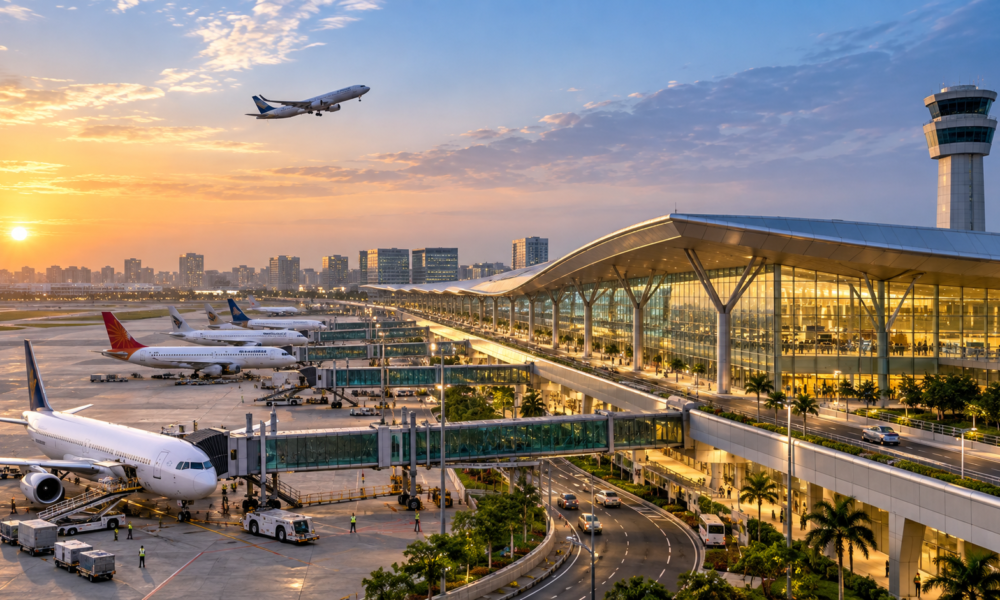
Adani Airports investment 2026: Adani Airport Holdings Limited (AAHL) is set to raise approximately ₹9,825 crore ($1 billion) from a consortium of major global and domestic investors as the airport operator accelerates infrastructure expansion, airport modernisation and the development of airport-linked commercial ecosystems.
The investment comes at a significant moment for India’s aviation sector, which is undergoing a major capacity expansion as passenger traffic, airport connectivity and demand for modern aviation infrastructure continue to grow.
According to Adani Airports, the consortium includes Alpha Wave Global, Premji Invest, Temasek and funds managed by BlackRock. Upon completion of the transaction’s three planned tranches, the investors will collectively hold approximately 5.54% of AAHL.
The transaction values Adani Airport Holdings at approximately $18 billion on a pre-money equity valuation basis, providing a significant external institutional valuation benchmark for the company’s airport platform.
₹9,825 Crore Investment: Where Will the Money Go?
The capital is expected to support three broad areas of development.
The first is the expansion and modernisation of airport infrastructure across AAHL’s portfolio. This includes increasing airport capacity and improving facilities as India’s aviation demand grows.
The second focus is the development of Adani Airport City ecosystems around its airports. The company said approximately 22 million sq ft of mixed-use development is planned in the first phase.
This is particularly relevant for the real estate and infrastructure sector because modern airports are increasingly being developed as integrated urban ecosystems rather than standalone passenger terminals.
Airport-led development can bring together commercial offices, retail, hospitality, entertainment, logistics and other services around major aviation hubs.
The third area is the expansion of passenger-facing and non-aeronautical businesses, including ground handling. These businesses can provide airport operators with additional sources of revenue beyond aviation-related charges.
Adani Airports Targets 200 Million Passenger Capacity
The investment is expected to help AAHL increase its capacity to serve approximately 200 million passengers annually.
That target reflects the scale of the infrastructure opportunity emerging around India’s aviation sector.
AAHL currently operates a portfolio of eight airports, including airports in Mumbai. Reuters reported that the operator handles roughly a quarter of India’s passenger traffic and about one-third of its air cargo volumes.
The company’s expansion therefore has implications beyond airport terminals. Greater passenger capacity can create additional demand for:
- Airport-linked commercial real estate
- Hotels and hospitality
- Retail and entertainment
- Logistics infrastructure
- Ground transportation
- Warehousing and cargo facilities
- Office and mixed-use developments
- Digital and passenger-service infrastructure
Airport Cities Could Become a Major Growth Engine
One of the most important elements of the announcement is the plan to develop approximately 22 million sq ft of mixed-use space during the first phase of the Adani Airport City development.
The airport-city model is gaining importance as major airports become increasingly integrated with surrounding urban development.
Instead of treating an airport as simply a place where passengers arrive and depart, the model seeks to create a broader commercial ecosystem around the aviation hub.
For developers and investors, such ecosystems can potentially create opportunities across retail, hospitality, offices, entertainment and other commercial uses.
The scale of the planned development also demonstrates how airport infrastructure can increasingly influence the real estate landscape of the cities in which major airports operate.
Temasek and BlackRock Join Investor Consortium
The investor mix is another important part of the transaction.
Temasek, Singapore’s state-owned investment company, is participating alongside BlackRock-managed funds, Alpha Wave Global and Premji Invest.
Adani Airports said the participation of long-term domestic and international investors brings institutional capital into India’s aviation infrastructure sector at a time when the industry is entering a period of passenger growth, capacity expansion and infrastructure investment.
Reuters reported that the transaction involves three tranches, with the final tranche expected to be completed by July 2027.
Adani Enterprises will remain the controlling shareholder following the transaction.
Adani Airports’ Financial Performance
The latest investment comes after a strong operating period for Adani Airports.
Adani Enterprises reported that Adani Airports’ EBITDA rose 49% year-on-year to ₹1,633 crore in Q1 FY27, while airport revenue increased 39% year-on-year to ₹3,763 crore.
The company also reported strong growth in both aviation and non-aviation revenue.
In Q1 FY27, aero and non-aero revenue recorded year-on-year growth of 16% and 53%, respectively, according to Adani Enterprises.
This growing contribution from non-aeronautical businesses is important because airports globally are increasingly looking beyond passenger fees and aviation operations to generate revenue through retail, food and beverage, parking, advertising, hospitality and other commercial activities.
Navi Mumbai Airport Adds to Expansion Story
The airport expansion strategy is also unfolding alongside the development of new aviation infrastructure.
Navi Mumbai International Airport began international flight operations on July 15, 2026, according to Adani Enterprises.
The airport represents a major addition to Mumbai’s aviation infrastructure and is expected to play a role in meeting the region’s long-term passenger demand.
The combination of new airport capacity and expansion of existing facilities illustrates the broader infrastructure cycle taking shape in Indian aviation.
Why This Matters for India’s Infrastructure Sector
The ₹9,825-crore fundraise is important because it highlights how India’s infrastructure assets are increasingly attracting long-term institutional capital.
Airports require significant upfront investment, but their economic impact can extend well beyond aviation.
A major airport can become an anchor for urban development by connecting businesses, consumers, logistics networks and tourism markets.
The Adani Airports strategy illustrates this transition from airport infrastructure to integrated airport ecosystems.
With the planned 200-million-passenger annual capacity and the development of airport-city projects, the company is positioning its airport business as a broader infrastructure and urban-development platform.
What Comes Next for Adani Airports?
The immediate focus will be on implementing the planned investment and deploying capital across airport expansion, modernisation and airport-city development.
The completion of the three investment tranches will extend into 2027, while the company continues to scale its existing airport network and associated businesses.
The transaction also puts the spotlight on the broader investment opportunity in India’s aviation infrastructure market.
As passenger volumes increase and cities require additional connectivity, airports could increasingly serve as catalysts for surrounding commercial and real estate development.
For infrastructure investors, developers and policymakers, the bigger story may therefore not be the ₹9,825-crore fundraise alone, but the emergence of airport-led urban infrastructure as a significant growth segment in India.
Read also: Adani Enterprises said its infrastructure portfolio is entering another phase of capital expenditure, with airports, roads, energy and digital infrastructure among its major platforms.
Key Numbers
- Particular Details
- Primary equity raised ₹9,825 crore
- Approx. dollar value $1 billion
- AAHL pre-money valuation ~$18 billion
- Investor consortium stake ~5.54%
- Planned airport-city mixed-use development ~22 million sq ft
- Target annual passenger capacity ~200 million
- Number of airports operated by AAHL 8
- Final investment tranche expected July 2027









No Comment! Be the first one.