







Union Cabinet Clears ₹2.19 Lakh Crore Infrastructure Push, Strengthening India’s Industrial and Transport Network
India has taken another significant step towards expanding its infrastructure ecosystem after the Union Cabinet approved a series of major projects and policy initiatives worth more than ₹2.19 lakh...

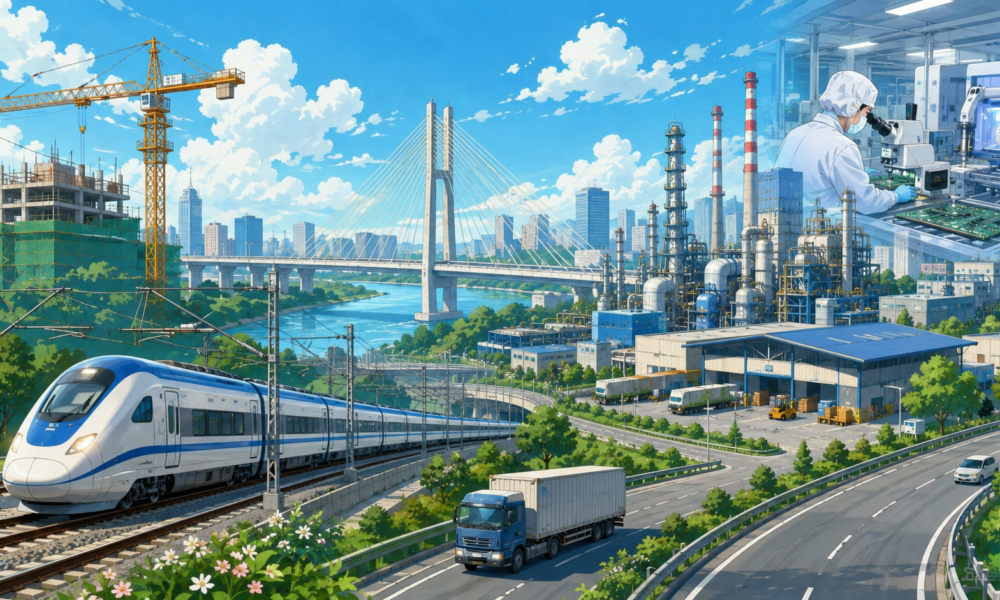
India has taken another significant step towards expanding its infrastructure ecosystem after the Union Cabinet approved a series of major projects and policy initiatives worth more than ₹2.19 lakh crore. The decisions cover railways, semiconductor manufacturing, mobile phone production, industrial development and strategic investments, reflecting the government’s continued focus on improving connectivity while strengthening domestic manufacturing capabilities.
The package is expected to accelerate economic activity across multiple sectors by improving logistics, supporting industrial growth and creating new opportunities for private investment. With infrastructure remaining a central pillar of India’s long-term development strategy, the latest approvals are likely to have a far-reaching impact on businesses, supply chains and regional economies.
One of the biggest announcements is the launch of Semicon 2.0, which aims to build on India’s growing semiconductor ambitions. As demand for chips continues to rise across electric vehicles, consumer electronics, artificial intelligence and industrial automation, expanding domestic semiconductor production has become a strategic priority. The initiative is expected to encourage global manufacturers to increase investments while strengthening India’s position within the global electronics supply chain.
The Cabinet also approved the Mobile Phone Manufacturing Scheme (MPMS), designed to further boost local production of smartphones and related electronics. India has already emerged as one of the world’s largest smartphone manufacturing destinations, and the new scheme seeks to increase exports, deepen localisation and generate employment across manufacturing clusters.
Rail infrastructure also received a major boost through approvals for network upgrades and capacity expansion projects. Improved railway connectivity remains critical for reducing freight costs, supporting industrial corridors and improving passenger movement. Modern rail systems are expected to play a larger role in connecting manufacturing centres with ports, logistics hubs and urban markets.
The government’s continued investment in transport infrastructure aligns with the broader PM Gati Shakti framework, which focuses on integrated planning across roads, railways, ports and logistics networks. Better coordination between transport modes is expected to improve efficiency while lowering logistics costs for businesses operating across the country.
Industry experts believe the latest approvals also reinforce investor confidence by providing long term policy support across high growth sectors. Infrastructure spending typically creates multiplier effects, stimulating demand for steel, cement, engineering services, construction equipment and skilled labour. It also encourages private sector participation in manufacturing and industrial development.
For the real estate sector, stronger industrial infrastructure often translates into higher demand for warehousing, logistics parks, commercial developments and residential projects around emerging economic corridors. As new manufacturing facilities and transport projects become operational, surrounding regions are expected to witness increased economic activity and urban expansion.
The Cabinet’s decisions also complement India’s broader objective of becoming a global manufacturing and supply chain hub. By combining investments in transport infrastructure with advanced manufacturing sectors such as semiconductors and electronics, the government is seeking to build an integrated industrial ecosystem capable of supporting future economic growth.
As infrastructure investment continues to remain a national priority, these approvals represent another milestone in India’s journey towards building a modern, resilient and globally competitive economy. The coming years will determine how effectively these initiatives translate into on ground development, employment generation and enhanced competitiveness for Indian industry.







No Comment! Be the first one.