







India Plans Dedicated Power Grid for Data Centres as AI Boom Drives Energy Demand
India’s rapidly growing data centre sector could soon receive dedicated power infrastructure as the Ministry of Power prepares a long-term strategy to support the country’s expanding...

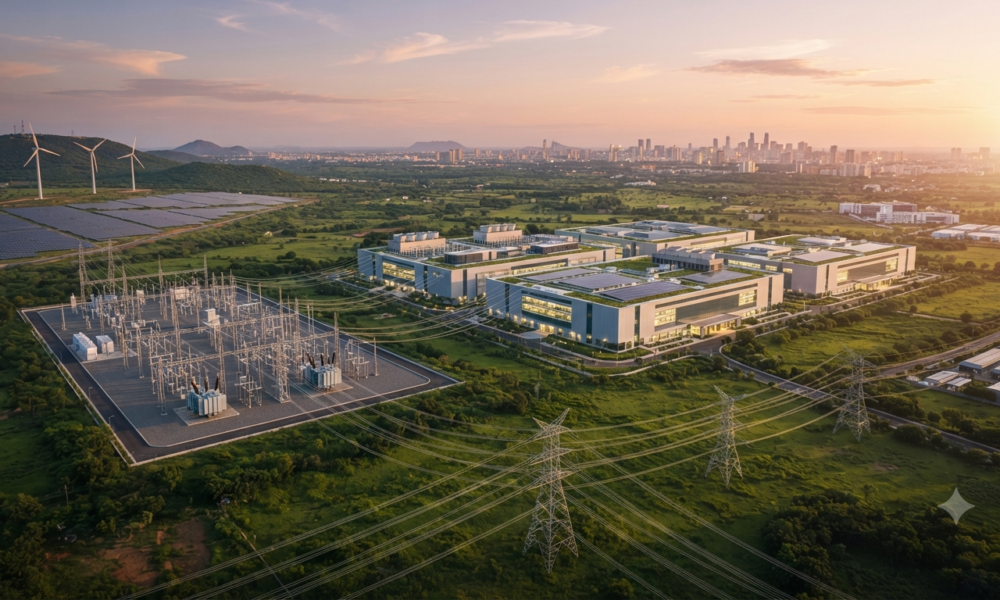
India’s rapidly growing data centre sector could soon receive dedicated power infrastructure as the Ministry of Power prepares a long-term strategy to support the country’s expanding digital economy. With artificial intelligence, cloud computing and hyperscale facilities driving electricity demand to new highs, the government is assessing how the national grid can meet the sector’s future requirements.
According to government estimates, India’s data centres are expected to require around 26 GW of electricity by 2032, with demand projected to increase to nearly 35.7 GW by 2040. The sharp rise is being driven by AI workloads, large cloud campuses, digital public infrastructure and enterprise migration to cloud-based platforms.
To prepare for this growth, the Ministry of Power is working with stakeholders to evaluate dedicated transmission infrastructure and strengthen grid readiness. The objective is to ensure uninterrupted, high-quality electricity for facilities that operate around the clock and require extremely high levels of reliability.
Data centres have become one of the fastest-growing infrastructure asset classes in India. Global technology companies, cloud service providers and domestic developers continue to invest in new campuses across Mumbai, Chennai, Hyderabad, Bengaluru, Noida and other emerging digital hubs. The rapid expansion is increasing pressure on existing power networks while creating demand for smarter energy management solutions.
Industry experts believe a dedicated power strategy could significantly improve planning for future AI infrastructure. Stable electricity supply is critical for high-density AI servers, which consume substantially more power than conventional computing systems. Alongside reliable transmission, operators are also investing in renewable energy, battery storage and advanced cooling technologies to improve efficiency and reduce operating costs.
The government’s initiative reflects a broader recognition that digital infrastructure is now as important as transport, logistics and industrial infrastructure in supporting economic growth. As India positions itself as a global destination for AI investment, ensuring sufficient power capacity will become a key competitive advantage.
The move also complements India’s wider infrastructure strategy, where physical and digital networks are being planned together to support long-term economic development. Recent government initiatives have focused on strengthening infrastructure monitoring, improving connectivity and enabling evidence-based planning across key sectors.
For data centre developers, the proposed power infrastructure could reduce uncertainty around future projects while enabling larger AI campuses to come online more quickly. It may also encourage fresh investments from global hyperscalers looking for reliable energy availability before committing to large-scale developments.
As artificial intelligence continues to reshape industries, electricity infrastructure is becoming one of the most important foundations of the digital economy. India’s effort to prepare its power network for the next generation of data centres signals that future infrastructure planning will extend well beyond roads, airports and railways to include the energy systems that keep the country’s digital ecosystem running.







No Comment! Be the first one.