






India’s Core Infrastructure Output Climbs to Five-Month High as Cement, Steel and Power Drive Growth
India’s infrastructure sector gathered fresh momentum in June 2026, with core infrastructure output rising 5 per cent year on year, marking its fastest pace in five months. The latest figures...

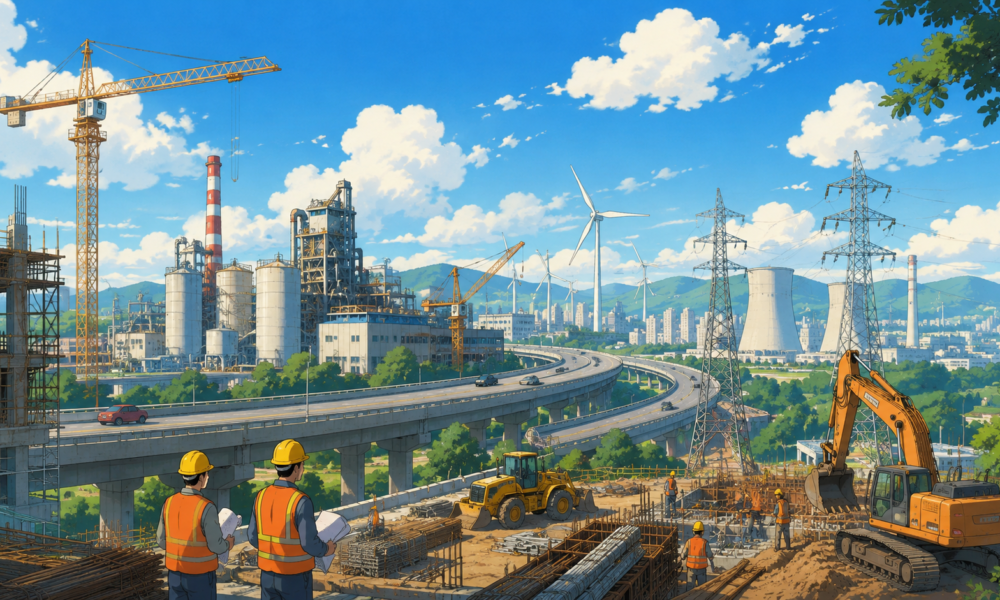
India’s infrastructure sector gathered fresh momentum in June 2026, with core infrastructure output rising 5 per cent year on year, marking its fastest pace in five months. The latest figures highlight stronger activity across construction, manufacturing and energy, giving a positive signal for infrastructure developers, real estate firms and industrial investors.
The data comes under the government’s revised core sector series, which now uses 2022-23 as the base year and expands the index from eight to nine industries by including iron ore. The revised methodology provides a broader picture of India’s industrial foundation as policymakers continue to push investment-led economic growth.
One of the biggest contributors to June’s growth was cement production, which increased by 9.8 per cent compared with the same month last year. Strong cement demand reflects continued activity across highways, metro rail projects, housing developments, logistics parks and industrial corridors. Rising construction activity has also supported demand for steel, whose production grew by 4.6 per cent during the month.
Electricity generation also recorded robust growth of 9.8 per cent, indicating expanding industrial operations and higher power consumption across commercial and manufacturing sectors. Coal production returned to positive territory with a 1.4 per cent increase after a weak performance in May, helping improve fuel availability for thermal power generation.
The strongest growth came from iron ore production, which surged by 43.9 per cent. Increased mining activity is expected to support steel manufacturers and infrastructure projects that require large volumes of raw materials. The inclusion of iron ore in the revised core sector basket also reflects its growing importance within India’s industrial economy.
Not every sector reported gains. Crude oil, natural gas, fertilisers and refinery products continued to register declines, showing that parts of the energy sector remain under pressure despite broader industrial expansion. Even so, stronger performances in construction-related industries outweighed these weaknesses, helping overall infrastructure output maintain a healthy growth trajectory.
For the April to June quarter, core infrastructure output expanded by 3.6 per cent compared with just 1 per cent during the corresponding period last year. The improvement suggests that government capital expenditure, industrial investments and private sector construction continue to provide support despite global economic uncertainties.
The latest numbers are particularly significant for the infrastructure ecosystem. Developers, EPC contractors, cement manufacturers, steel producers and logistics companies typically use core sector performance as an indicator of future project activity. Strong output growth often translates into higher demand for construction materials, machinery and engineering services.
Industry experts also expect continued momentum from ongoing investments in transport networks, industrial corridors, urban infrastructure and logistics facilities. Combined with initiatives such as PM Gati Shakti and sustained public capital expenditure, stronger core sector growth could improve project execution and encourage additional private investment across the infrastructure value chain.
While challenges remain in the energy segment, June’s performance shows that India’s infrastructure engine continues to expand, supported by construction, manufacturing and industrial demand. If this trend continues over the coming months, it could strengthen confidence across the country’s real estate, infrastructure and manufacturing sectors while supporting long-term economic growth.








No Comment! Be the first one.