








Adani Energy Solutions Wins ₹4,700 Crore Maharashtra Transmission Project to Move 4,500 MW of Clean Power
Adani Energy Solutions Ltd (AESL) has secured a ₹4,700 crore power transmission project in Maharashtra that will help move up to 4,500 MW of renewable and storage power to major consumption centres...

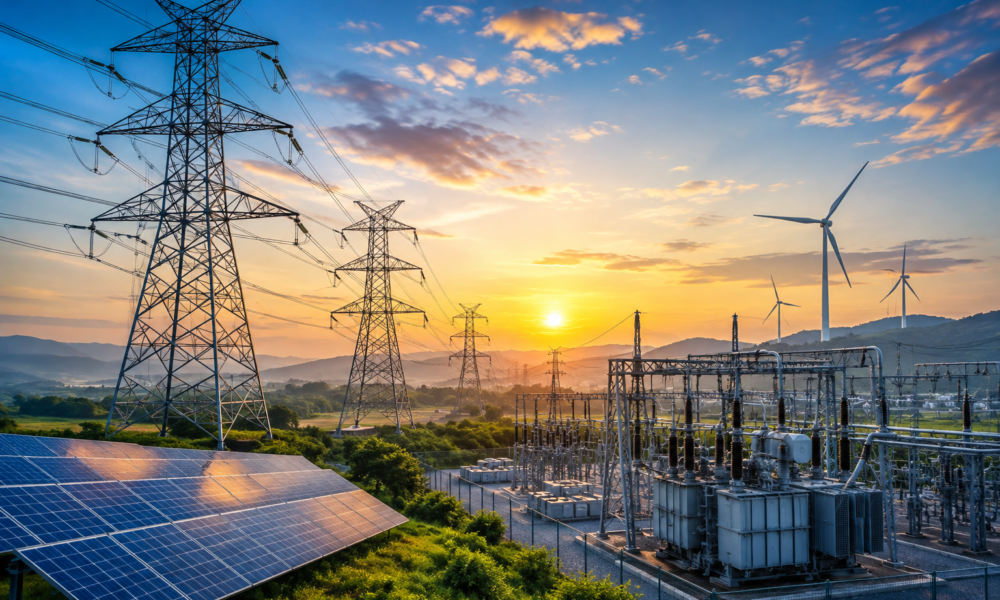
Adani Energy Solutions Ltd (AESL) has secured a ₹4,700 crore power transmission project in Maharashtra that will help move up to 4,500 MW of renewable and storage power to major consumption centres in the state. The project comes as India expands its electricity transmission network to support the rapid growth of renewable energy and energy storage.
The project, officially called the Network Expansion Scheme in Western Region to Cater to Pumped Storage Potential near Satara, was awarded through the tariff-based competitive bidding process. AESL emerged as the lowest bidder. The project will be implemented through a special purpose vehicle called Satara Power Transmission Ltd and is scheduled to be completed within 36 months.
The planned infrastructure includes a new 765/400 kV substation at Satara, a 765 kV double-circuit transmission line between Kolhapur and Satara, and an expansion of the existing Kolhapur pooling station. Together, these assets will add 562 circuit kilometres of transmission lines and 9,000 MVA of transformation capacity to AESL’s network.
The project has a wider role beyond simply adding transmission lines. It is designed to help evacuate renewable electricity generated in Karnataka and transfer it towards major load centres in Maharashtra. It will also support the growing pumped storage ecosystem around Satara, Pune and the Mumbai Metropolitan Region. Pumped storage plants can store electricity and release it when demand rises, making them useful for balancing intermittent sources such as solar and wind.
For ordinary electricity consumers, stronger transmission infrastructure can make it easier to bring power from areas with high renewable generation to cities and industrial regions where electricity demand is concentrated. A larger and better-connected grid can also improve the ability of the power system to absorb new renewable capacity while maintaining reliability.
The project is particularly relevant as India works towards its target of 500 GW of non-fossil fuel power capacity by 2030. Building renewable generation is only one part of that transition. The electricity also needs to be transported across long distances, requiring substations, transmission corridors and grid upgrades. The Maharashtra project therefore highlights the growing importance of transmission infrastructure alongside solar, wind and storage investments.
The development also strengthens Maharashtra’s position as a major electricity demand centre. Mumbai and the wider Mumbai Metropolitan Region require reliable power for homes, offices, manufacturing, transport systems and expanding digital infrastructure. Improved transmission capacity can help the state handle future demand while increasing the share of renewable electricity in its power mix.
For AESL, the project takes its transmission network to 29,739 circuit kilometres and 1,43,425 MVA of transformation capacity, according to the company. Its transmission order book now stands at around ₹85,000 crore.
The project shows how India’s infrastructure investment is increasingly moving beyond roads, railways and physical connectivity. Power transmission is becoming a critical part of the country’s next infrastructure cycle, particularly as renewable generation, electricity demand, energy storage and industrial development expand together.







No Comment! Be the first one.