







How Monsoon Disruptions Affect Construction Projects and Property Buyers
Heavy rain can create major challenges for construction projects in India. Waterlogged roads, delayed material deliveries and unsafe working conditions can slow building work. For property buyers,...

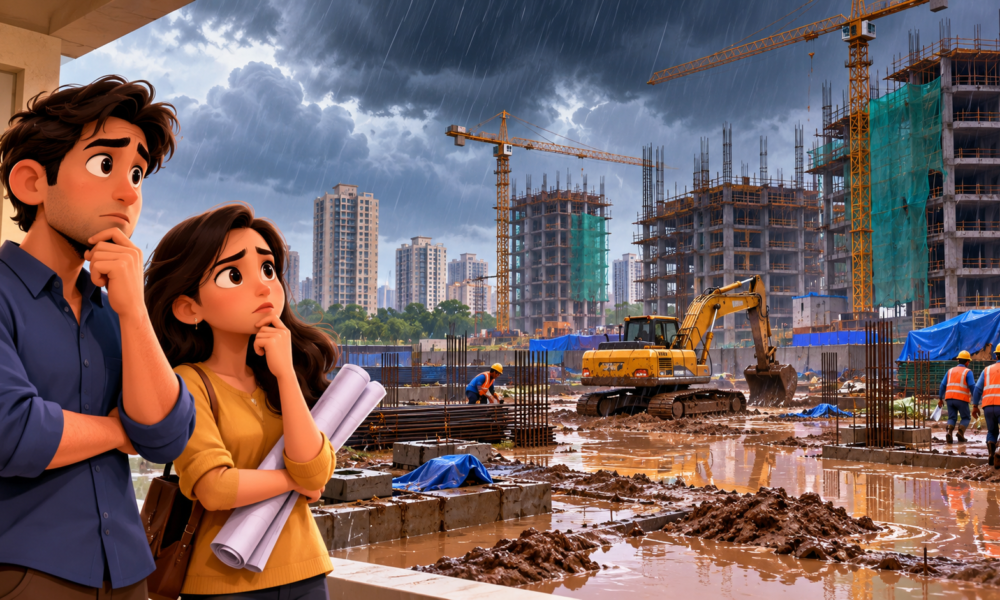
Heavy rain can create major challenges for construction projects in India. Waterlogged roads, delayed material deliveries and unsafe working conditions can slow building work. For property buyers, these problems can affect possession dates, site visits and the condition of homes.
India’s cities are also facing greater pressure to prepare for extreme weather. A World Bank report published in July 2025 said India’s urban population could almost double to 951 million by 2050. It also highlighted the need for cities to become more resilient to extreme weather events.
Why Does Monsoon Weather Delay Construction?
Construction sites need suitable weather for activities such as excavation, concrete work, painting and waterproofing. Heavy rainfall can make soil unstable and fill excavated areas with water. This can delay foundations, basement construction and underground utility work.
Rain can also affect the movement of cement, steel, bricks and other building materials. Poor access roads and flooded site entrances may prevent trucks from reaching construction locations on time.
Some activities can continue during light rain if proper safety measures are in place. However, work may need to stop during heavy rain, lightning or unsafe site conditions.
How Can Rain Affect Building Quality?
Water entering a building during construction can damage materials and create long-term maintenance problems if it is not managed properly.
Poor waterproofing may lead to damp walls, leaking ceilings and water entering basements. Blocked drainage systems can allow water to collect around buildings. If construction materials are stored incorrectly, prolonged exposure to moisture can also affect their condition.
These problems are not inevitable. Developers can reduce risks through proper drainage, waterproofing, quality checks and regular site inspections.
Property buyers should look for visible signs of water seepage during site visits. They should also ask how the developer manages stormwater, basement drainage and waterproofing.
What Does This Mean for Property Buyers?
The monsoon season can make it easier to identify drainage problems that may not be obvious during dry weather. Buyers visiting a completed project can observe whether water collects near entrances, parking areas, lifts or basement ramps.
For under-construction homes, buyers should review the agreement for the promised possession date and the terms covering delays. They should also check the project’s registration and disclosures on the relevant state Real Estate Regulatory Authority website.
A delay caused by rain does not automatically remove a developer’s legal responsibilities. The applicable agreement and law determine the rights available to buyers.
How Can Developers Reduce Monsoon Risks?
Developers can prepare for heavy rainfall by clearing drains, covering exposed materials, checking temporary electrical installations and providing safe access routes.
They can also schedule weather-sensitive work carefully and inspect retaining walls, excavation areas and basement protection systems.
City authorities have an important role too. Roads, stormwater drains and sewage networks must be maintained so that water can move away from construction sites and residential areas.
Why Climate-Ready Construction Matters
As Indian cities expand, construction quality and climate resilience are becoming increasingly important. A building’s value depends not only on its location and design but also on how well it handles rain, heat and other environmental pressures.
For buyers, checking drainage, waterproofing and project documentation can help reduce unpleasant surprises. For developers, planning for monsoon conditions can protect workers, reduce repair costs and improve confidence among customers.








No Comment! Be the first one.