







India accelerates infrastructure push with focus on high-speed rail and transport
India is moving ahead with a fresh phase of infrastructure development as the government strengthens investment in transport, railways and logistics. The latest initiatives show a clear focus on...

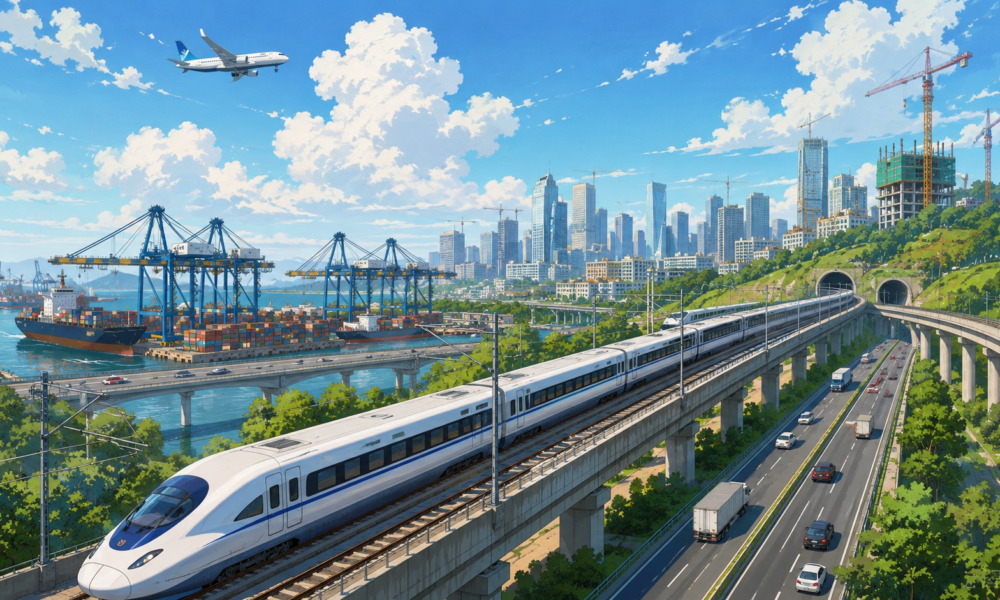
India is moving ahead with a fresh phase of infrastructure development as the government strengthens investment in transport, railways and logistics. The latest initiatives show a clear focus on improving connectivity, reducing travel time and supporting long term economic growth through modern infrastructure.
One of the biggest developments is the government’s decision to introduce Indian design standards for the next seven high speed rail corridors. Instead of relying on foreign specifications, future bullet train projects will use locally developed standards for bridges, tunnels, stations and elevated structures. The move is expected to lower construction costs, improve project delivery and strengthen India’s engineering capabilities. The new corridors are being planned for trains capable of running at speeds of up to 350 kilometres per hour, marking another major step in the country’s high speed rail programme.
The proposed high speed corridors will connect several important economic regions across the country. These include Mumbai to Pune, Pune to Hyderabad, Hyderabad to Bengaluru, Hyderabad to Chennai, Chennai to Bengaluru, Delhi to Varanasi and Varanasi to Siliguri. Together, these projects are expected to improve passenger mobility, support regional development and create new opportunities for businesses and industries located along these routes.
India is also continuing to modernise its railway network through the expansion of Vande Bharat services. According to the latest government data, 162 Vande Bharat train services are currently operating across the country. The recently launched Vande Bharat Sleeper has recorded full occupancy during its initial months of operation, reflecting strong demand for faster and more comfortable long distance rail travel. The government is also expanding the Amrit Bharat train network while redevelopment work continues at hundreds of railway stations under the Amrit Bharat Station Scheme.
Freight infrastructure is also receiving significant attention. Dedicated Freight Corridors are helping improve cargo movement by separating freight and passenger traffic, allowing goods to move more efficiently across major industrial routes. The improved network is expected to lower logistics costs, reduce transit time and strengthen supply chains for manufacturers and exporters. These improvements are supporting India’s broader ambition of becoming a global manufacturing and logistics hub.
Infrastructure spending remains a central part of the government’s development strategy. Recent policy announcements continue to prioritise investment in rail safety, high speed connectivity, freight transport and passenger convenience. Large scale manufacturing of new railway coaches is also progressing, with thousands of coaches currently under production to meet future demand across the network.
The latest developments underline India’s commitment to building a modern and efficient transport ecosystem. From high speed rail corridors and upgraded railway stations to stronger freight networks and improved passenger services, infrastructure continues to play a key role in supporting economic growth, improving connectivity and attracting long term investment. As these projects move from planning to execution, they are expected to strengthen regional development while creating a faster, safer and more reliable transport network for businesses and communities across the country.






No Comment! Be the first one.