








India’s Battery Storage Infrastructure Race: ₹3.49 Lakh Crore Investment Requirement Puts Grid Modernisation in Focus
India’s energy transition is creating a new infrastructure challenge: generating electricity is no longer enough. The country must also be able to store power and deliver it when demand rises...

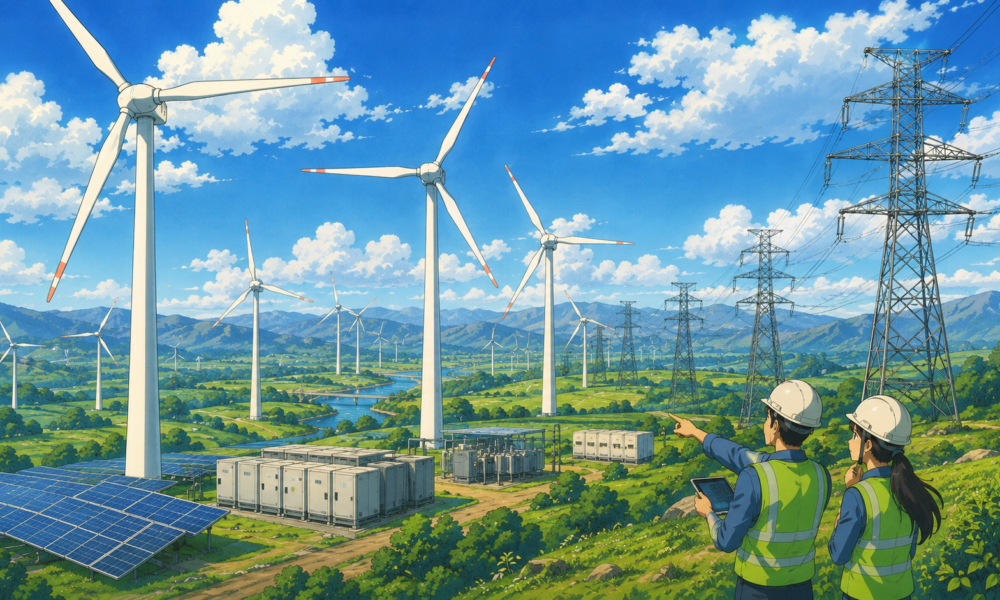
India’s energy transition is creating a new infrastructure challenge: generating electricity is no longer enough. The country must also be able to store power and deliver it when demand rises or renewable generation falls.
Battery Energy Storage Systems (BESS) are emerging as a critical part of this transition. These facilities store electricity and release it when required, helping balance the power grid, support renewable energy integration and manage periods of peak demand.
According to the Ministry of Power, India’s projected BESS requirement could reach 47.24 GW of power capacity and 236 GWh of storage capacity by 2031–32, with an estimated investment requirement of approximately ₹3.49 lakh crore.
For India’s infrastructure sector, this creates opportunities across battery manufacturing, grid equipment, transmission systems, project development and energy management.
The gap between installed battery storage and projected requirements illustrates the scale of infrastructure development that may be needed. These projections are planning estimates, not a guarantee that all capacity will be commissioned on schedule.
- Renewable energy needs reliable storage
Solar and wind generation fluctuate with weather conditions and the time of day. Batteries can store surplus electricity and release it when generation declines or demand increases. This can make renewable power more useful to the wider electricity system.
- The electricity grid needs greater flexibility
As the share of renewable energy grows, grid operators must manage changes in supply, demand and electricity flows. Storage can provide services such as frequency regulation and voltage control, subject to the capabilities of the installed system.
- Storage creates a new infrastructure investment market
Battery projects require more than battery cells. They also need power-conversion equipment, control systems, electrical connections, land, safety systems and grid integration. This creates potential business opportunities across the engineering, procurement and construction ecosystem.
- Industrial power requirements are changing
Manufacturing facilities, commercial buildings and other large electricity users need dependable power. Storage may help eligible users manage peak demand and improve energy management, although the economics depend on electricity tariffs, battery costs, operating patterns and project design.
Industrial trend: From power generation to integrated energy infrastructure
India’s energy infrastructure is increasingly being planned around a combination of generation, transmission and storage rather than generation capacity alone.
The Ministry of Power’s Green Energy Corridor Phase III initiative reflects this shift. The scheme provides for transmission infrastructure capable of evacuating up to 135 GW of renewable energy and the deployment of 50 GWh of battery storage. Its reported overall outlay is ₹1,86,405 crore, with implementation targeted by FY 2032–33.
This creates an industrial opportunity across several connected segments:
- Battery manufacturing: Supplying cells, battery packs and associated components.
- Grid infrastructure: Building transmission and distribution systems capable of handling changing electricity flows.
- Energy storage development: Financing, constructing and operating utility-scale storage projects.
- Power electronics and software: Providing inverters, monitoring systems and controls that manage charging, discharging and grid interaction.
- Engineering and safety: Designing thermal management, fire protection and electrical systems for large installations.
The industrial challenge is to make these projects commercially viable while maintaining safety, reliability and cost efficiency. Investment announcements alone do not establish that a project has secured financing, reached construction or begun operations.
What the infrastructure sector should watch
Over the next several years, the development of battery storage could influence how renewable energy projects are designed, how grid infrastructure is upgraded and how electricity markets value flexibility.
For infrastructure developers, the main opportunities will depend on project tenders, financing conditions, equipment costs, grid connections and the commercial arrangements available for storing and supplying electricity.
For manufacturers, demand could extend beyond battery cells to power electronics, thermal management, control software and specialised electrical equipment. Domestic manufacturing capacity and supply-chain resilience will be important considerations as deployment expands.
For policymakers and grid operators, the priority will be coordinating storage deployment with transmission upgrades, renewable generation and electricity demand. Battery storage also has limitations: it is not a substitute for every form of generation or long-duration storage, and its effectiveness depends on the duration of storage, charging availability and system design.
The key measure of progress will therefore be the amount of storage capacity actually commissioned and operating reliably, rather than announced targets alone.
The bottom line: India’s battery storage expansion represents a significant emerging infrastructure market. If investment, grid upgrades and project execution keep pace with planning requirements, energy storage could become an increasingly important component of the country’s electricity infrastructure and industrial development.








No Comment! Be the first one.