





Chennai Free Trade Warehousing Zone Set for 20% Cargo Growth as Tamil Nadu Manufacturing Expands
India’s industrial logistics sector continues to gather pace, with Chennai emerging as one of the country’s fastest-growing warehousing and trade hubs. DP World’s Integrated Chennai...

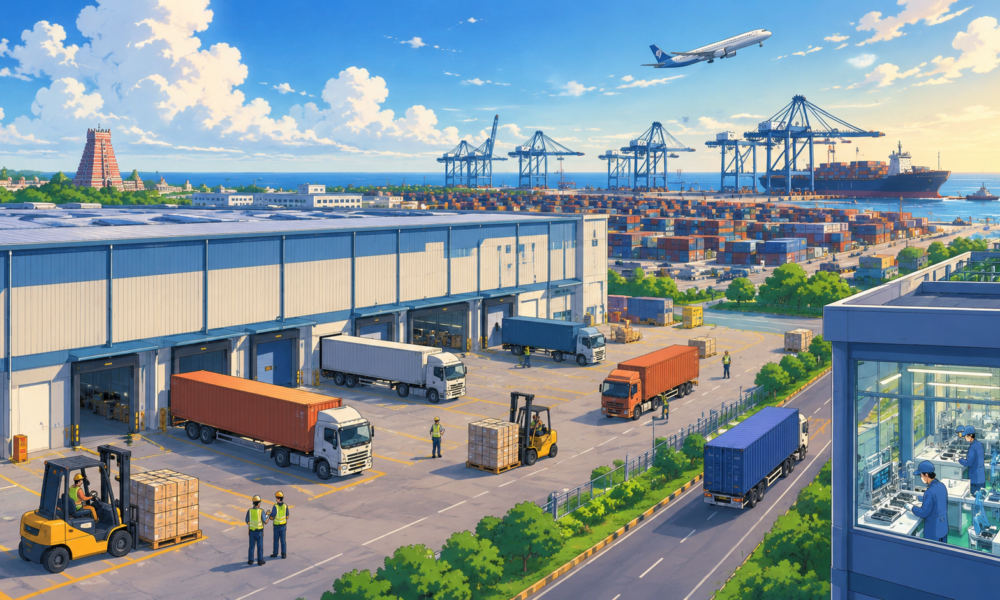
India’s industrial logistics sector continues to gather pace, with Chennai emerging as one of the country’s fastest-growing warehousing and trade hubs. DP World’s Integrated Chennai Business Park (ICBP), the largest Free Trade Warehousing Zone (FTWZ) in its Indian network, is expected to record nearly 20% cargo growth over the coming year, driven by Tamil Nadu’s manufacturing expansion and rising export activity.
The development reflects a wider shift in India’s industrial landscape. Manufacturers across sectors such as electronics, automobiles, engineering and consumer goods are increasing production capacity, creating stronger demand for modern logistics infrastructure. As businesses seek quicker movement of raw materials and finished products, integrated warehousing parks are becoming essential to supply chain efficiency rather than simply storage facilities.
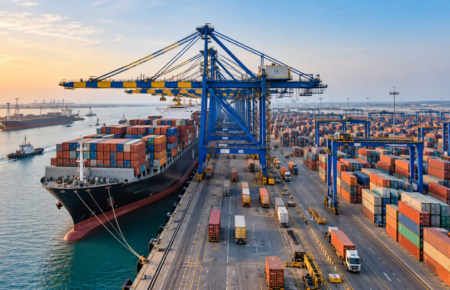
Located on the outskirts of Chennai, the Integrated Chennai Business Park combines warehousing, customs-enabled trade facilities and logistics services within a single ecosystem. Being part of DP World’s international network of economic zones allows companies operating from the facility to benefit from faster cargo handling, simplified trade processes and improved connectivity with domestic and overseas markets.
Tamil Nadu’s position as one of India’s leading manufacturing states is playing a major role in this growth. Global investments in electronics production, automobile manufacturing and industrial engineering have increased freight movement through Chennai, strengthening the demand for Grade A logistics assets. The state’s proximity to major ports further enhances its competitiveness for exporters and importers looking for reliable supply chain infrastructure.
The latest industry data also supports this momentum. According to Colliers, industrial and warehousing demand across India’s top eight cities reached nearly 22 million square feet during the first half of 2026, representing a 12% year-on-year increase. Delhi NCR and Chennai together accounted for more than 45% of the country’s total leasing activity during this period, highlighting their importance as the nation’s primary logistics markets. Third-party logistics companies remained the largest occupiers, while engineering and e-commerce firms continued to expand their warehouse footprint.
Developers are responding with fresh investments. New Grade A supply reached around 25 million square feet during H1 2026, exceeding leasing activity as companies prepare for long-term industrial expansion. Analysts believe this pipeline will help support manufacturing growth, supply chain diversification and increasing domestic consumption over the next several years.
For infrastructure investors, the trend highlights the growing value of logistics real estate. Modern industrial parks are increasingly being designed with technology-enabled operations, sustainable construction and multimodal transport connectivity to meet the evolving requirements of occupiers. These facilities are becoming strategic business assets that improve operational efficiency while reducing delivery timelines.
As India’s manufacturing ambitions continue to strengthen through government initiatives and private investment, logistics infrastructure is expected to remain a major growth engine. Chennai’s projected cargo expansion demonstrates how integrated warehousing, efficient transport networks and industrial development are working together to position India as a stronger global manufacturing and export destination.






No Comment! Be the first one.