




India’s Inland Waterways Expansion Set to Reshape Logistics and Industrial Growth
India’s inland waterways network is entering a new phase of expansion as the government moves ahead with plans to operationalise 20 additional National Waterways over the next five years. The...

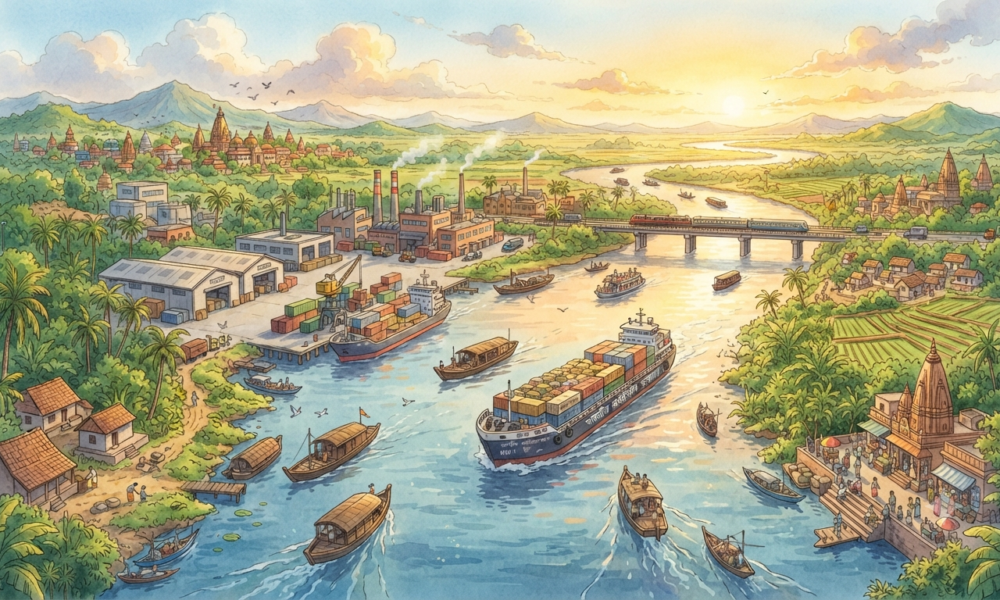
India’s inland waterways network is entering a new phase of expansion as the government moves ahead with plans to operationalise 20 additional National Waterways over the next five years. The initiative is expected to strengthen multimodal logistics, reduce freight costs and improve connectivity between industrial clusters, ports and hinterland markets, creating fresh opportunities for infrastructure developers and private investors.
India currently has 111 declared National Waterways covering more than 20,000 kilometres across 23 states and four Union Territories. While only 32 waterways are operational today, the latest expansion programme aims to unlock the commercial potential of rivers that have remained underutilised for decades. Cargo movement through inland waterways has already reached a record 145.84 million metric tonnes during FY 2024-25, demonstrating growing industry confidence in water-based transport.
The strategy complements flagship programmes such as PM GatiShakti, the National Logistics Policy and Sagarmala, all of which focus on building integrated transport infrastructure. Rather than relying solely on roads and railways, policymakers are encouraging cargo owners to adopt waterways for bulk commodities, including coal, cement, food grains, fertilisers and construction materials. This diversified transport network is expected to reduce congestion on highways while lowering logistics costs for businesses.
For the infrastructure sector, the opportunity extends well beyond dredging rivers. The expansion will require modern cargo terminals, multimodal logistics parks, warehousing facilities, inland ports, navigation systems, bridges, last-mile road connectivity, and digital cargo management platforms. These investments are likely to attract engineering companies, logistics operators, EPC contractors and technology providers looking to participate in India’s evolving freight ecosystem.
Industrial corridors are also expected to benefit. Better river connectivity can improve access to manufacturing hubs, helping businesses transport raw materials and finished goods more efficiently. Reduced transport costs may further strengthen India’s export competitiveness while supporting regional economic development in states connected by navigable waterways. The government’s broader industrial corridor strategy already emphasises integrated logistics infrastructure, making inland waterways an important supporting pillar.
Environmental considerations also strengthen the case for inland water transport. Waterways typically consume less fuel per tonne of cargo compared with road transport, resulting in lower greenhouse gas emissions and improved energy efficiency. As companies increasingly focus on sustainable supply chains, river transport could become an attractive option for industries seeking to reduce their carbon footprint without compromising freight capacity.
Private participation is expected to increase as cargo volumes continue to rise and supporting infrastructure improves. Logistics companies, port operators and infrastructure investors are already evaluating opportunities around river terminals, storage facilities and multimodal transport hubs. With stronger policy support and long-term capital investment, inland waterways are gradually becoming an integral component of India’s national logistics framework.
As infrastructure planning increasingly shifts towards integrated transport networks, inland waterways are poised to play a larger role in supporting manufacturing, trade and economic growth. For the infrastructure industry, the next phase of development represents not only a transport upgrade but also a significant investment opportunity across logistics, construction and industrial infrastructure.




No Comment! Be the first one.