








Power Ministry Plans Dedicated Grid Strategy as India’s Data Centre Demand Accelerates
India is preparing for a major expansion in digital infrastructure as the Ministry of Power works on a dedicated strategy to meet the rapidly rising electricity demand from data centres. The move...


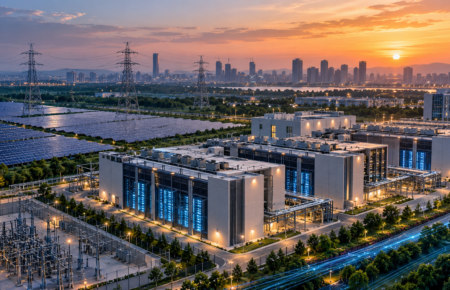
India is preparing for a major expansion in digital infrastructure as the Ministry of Power works on a dedicated strategy to meet the rapidly rising electricity demand from data centres. The move comes as artificial intelligence, cloud computing and digital services continue to fuel unprecedented investment in the country’s data infrastructure.
According to government estimates, electricity demand from data centres could rise to 26 GW by 2032 and further increase to 35.7 GW by 2040. To support this growth, the Power Ministry is working with industry stakeholders, power utilities and state governments to ensure adequate transmission capacity, reliable power supply and future-ready grid infrastructure.
The proposed approach goes beyond adding generation capacity. It focuses on building an integrated ecosystem where data centres receive uninterrupted power while maintaining grid stability. Industry experts believe that reliable electricity will become one of the most important factors influencing where future data centre campuses are developed.
India has emerged as one of the fastest-growing data centre markets globally, driven by increasing digital adoption, enterprise cloud migration, artificial intelligence workloads and government initiatives promoting digital services. Cities including Mumbai, Chennai, Hyderabad, Bengaluru, Noida and Pune continue to attract large investments from domestic and international operators.
The growing concentration of hyperscale facilities has also increased pressure on transmission networks. Unlike traditional commercial developments, data centres require continuous high quality power with minimal interruptions. Even brief outages can affect critical digital services, making resilient electrical infrastructure an essential requirement.
The ministry is therefore assessing future transmission corridors, substation capacity and regional power availability to support upcoming projects. The planning exercise is expected to help state utilities anticipate demand well before new facilities become operational, reducing delays in project execution.
The development also highlights the increasing convergence between digital infrastructure and the energy sector. While renewable energy adoption remains a priority for many operators, dependable grid connectivity continues to form the backbone of large-scale data centre operations. Industry participants are also exploring battery storage, green power procurement and energy-efficient cooling technologies to improve sustainability.
India’s infrastructure ecosystem has evolved significantly over the past decade, with investments spanning transport, logistics, ports and digital connectivity. As AI adoption expands across industries, digital infrastructure is becoming another strategic pillar of national development alongside roads, railways and power networks.
For investors, developers and infrastructure companies, the government’s planning signals confidence in the long-term growth of India’s digital economy. A stronger power backbone could accelerate future investments, improve project viability and strengthen India’s position as a preferred destination for hyperscale data centres serving both domestic and international markets.
As demand for computing capacity continues to rise, the next phase of India’s infrastructure story may be written not only through highways and airports, but also through resilient power networks supporting the country’s expanding digital backbone.









No Comment! Be the first one.