








Power Ministry Plans Dedicated Grid as India’s Data Centre Boom Accelerates
India’s fast-growing data centre sector is set to receive a major infrastructure boost as the Ministry of Power works on a dedicated strategy to meet the industry’s rapidly rising...

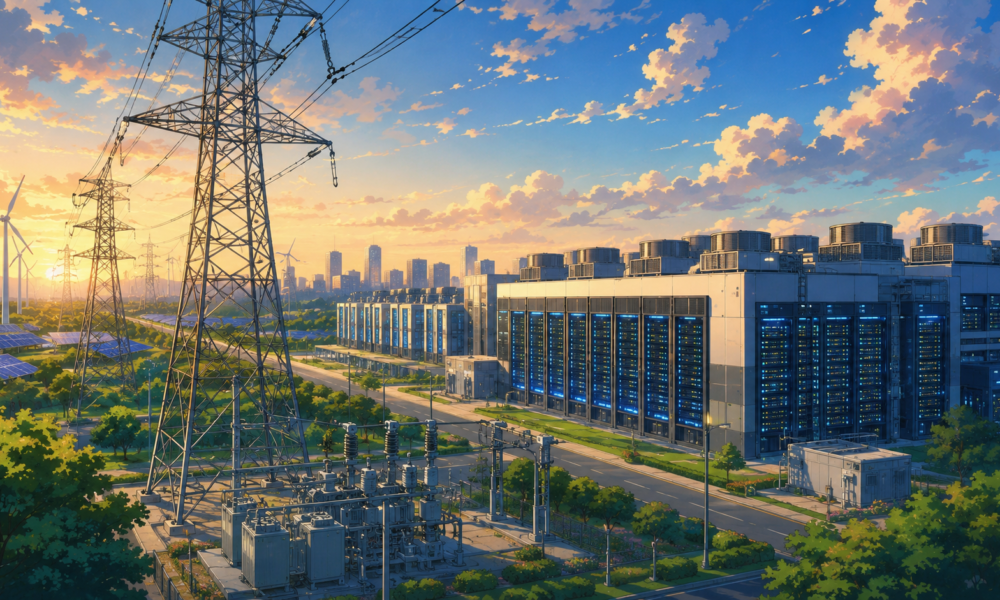
India’s fast-growing data centre sector is set to receive a major infrastructure boost as the Ministry of Power works on a dedicated strategy to meet the industry’s rapidly rising electricity demand. With artificial intelligence, cloud computing and digital services driving unprecedented investment, reliable power infrastructure is becoming as important as the data centres themselves.
The ministry has begun consultations with stakeholders to assess how India’s power network should evolve to support the next phase of digital infrastructure. According to internal projections, electricity demand from data centres could reach 26 GW by 2032 and rise further to 35.7 GW by 2040. These estimates underline the scale of infrastructure that will be required over the coming decade.
India has emerged as one of the world’s fastest-growing data centre markets, supported by rising internet usage, AI adoption, digital payments, e-commerce and cloud services. Global technology companies, hyperscale operators and domestic developers continue to announce large investments across Mumbai, Chennai, Hyderabad, Bengaluru, Pune and the National Capital Region.
However, constructing a data centre extends well beyond building the facility itself. Operators require uninterrupted electricity, multiple power sources, transmission infrastructure and resilient grid connectivity to maintain round-the-clock operations. As facilities become larger and AI workloads consume more energy, access to reliable power has become a key factor in selecting new locations.
The government’s latest initiative recognises this growing challenge. Rather than responding to demand after projects are commissioned, the Ministry of Power is planning infrastructure that can support future capacity. This approach could reduce project delays while improving investor confidence in India’s digital infrastructure ecosystem.
The move is expected to benefit not only data centre developers but also transmission companies, renewable energy providers, engineering firms and equipment manufacturers. New substations, transmission lines, backup systems and renewable energy integration are likely to become increasingly important as operators seek sustainable and reliable power solutions.
For India’s infrastructure sector, the development reflects a broader shift. Traditional infrastructure such as roads, railways and airports remains essential, but digital infrastructure is emerging as another pillar of economic growth. Data centres now require the same long-term planning and policy support as transport, logistics and industrial corridors.
Industry observers also believe that coordinated planning between power utilities, state governments and private developers will become increasingly important. States offering robust power infrastructure, faster approvals and renewable energy access could gain a competitive advantage in attracting future investments.
India’s digital economy continues to expand rapidly, creating demand for larger and more advanced data centres. Meeting that demand will depend not only on land availability and fibre connectivity but also on a resilient electricity network capable of supporting high-density computing facilities.
As AI adoption accelerates and digital transformation gathers pace across industries, the country’s next infrastructure challenge may not be building more data centres alone. It will be ensuring that the power network grows alongside them. The Ministry of Power’s latest initiative signals that India is beginning to prepare for that future.








No Comment! Be the first one.